
Does Strength Matter? Garage Doors to Handle Extreme Weather
If you’ve lived in the eastern Washington or north Idaho area for some time, you know the region has four distinguishable seasons. The region’s changing, occasionally extreme weather conditions can impact your home’s structural integrity. A sturdy, well-constructed garage door is essential for minimizing the risk of extensive property damage.
How Does Extreme Weather Affect Your Garage Door?
Hot weather is not uncommon in the Inland Northwest — Spokane averages 21 days with temperatures of at least 90 degrees Fahrenheit each year. Bitter cold can also be an issue. In December, the city’s coldest month, the average overnight temperature is a chilly 21.6 degrees. While hurricanes and tornadoes don’t pose a threat in the region, high-pressure air forced against the Cascade Range to the west frequently produces heavy winds.
These factors can affect garage strength and impede the door’s performance. Intense heat and sunlight can interfere with the photo-eye, while melted snow and cold can cause the door to freeze shut. Heavy winds can also cause significant damage to the door’s hardware.
Best Garage Doors for Extreme Weather
Choosing the right garage door is crucial for minimizing the impacts of harsh weather. As a Clopay® Master Authorized Dealer® serving the greater Spokane area and north Idaho since 2001, Continental Door can install a reinforced door from Clopay®, the most trusted brand in North America.
The Clopay product line includes insulated doors that provide reliable protection against extreme temperatures. Although hurricane garage doors aren’t a necessity in the Pacific Northwest, Continental Door can also install a WindCode® compliant door from Clopay designed to withstand the force of heavy winds.
How to Prepare Your Garage Door for Extreme Weather
Use these steps to get your garage door ready for an extreme weather event:
- If strong winds are in the forecast, use any heavy objects you can find to brace the door.
- Insert steel pins into the locking mechanism to prevent the door from flying open unexpectedly.
- Use two-by-four pieces of wood to brace the locks further.
- If your garage has windows, cover them with plywood to prevent the glass from shattering.
- Replace worn or damaged weather stripping to keep air from heavy winds out of the garage space.
Request Garage Door Service From Continental Door
At Continental Door, we can repair garage door wind damage and meet all your other service needs. Contact us to request a free estimate or schedule a convenient service appointment today!
Your Guide to Operable Walls for Your Garage
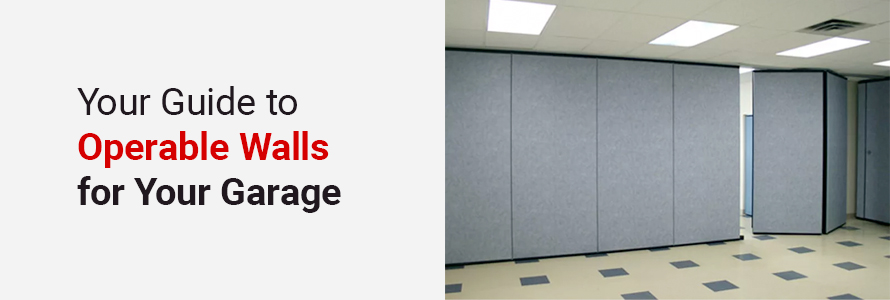
Have you ever looked at your garage and wondered how many amazing things you could do with all that extra space? Operable wall systems could be the ideal upgrade you’ve been looking for. You can build a temporary room in your garage using operable walls.
Operable walls are comprised of panels and act as the perfect room divider. Operable walls are unique among partition wall types. They’re practical, attractive and adaptable. Read on for everything you need to know about operable wall partitions.
What Is an Operable Wall?
An operable wall is a type of room divider preferred for easy assembly, sustainability and noise management. A system of individual panels makes up an operable wall. The panels can be used separately from one another but form an uninterrupted barrier when joined together. Operable walls are sturdy and provide permanent or temporary home additions.
Operable walls are easy to operate and maneuverable. There’s no need for a floor track, as the panels are often installed from the ceiling, but there’s the option for floor tracks if needed. Most operable wall systems have seals on the panels, so they provide an uninterrupted barrier once you’ve locked them into place.
How Can You Use an Operable Wall in Your Garage?
Operable walls allow you to make better use of the space in your garage. A garage partition wall can present many possibilities for using that extra space. You can build a temporary room in your garage and use it as an office, bedroom, recreational space or gym. The options are endless.
Installing operable wall partitions takes the permanence out of making an upgrade to your garage. Instead of calling in a crew of contractors and building a wall, you have a temporary option that will last as long as you need it. Operable wall systems give you extra room in your home, so let your imagination run wild.
What’s the Difference Between an Operable Wall and a Partition?
Both operable walls and partitions provide an opportunity to utilize your garage space better, but there are some differences between the two. Operable walls allow you greater flexibility in using your area, as you can keep an operable wall open or closed as you wish. Folding partitions are great if you’re looking for something less movable.
Types of Operable Walls

Operable walls come in several finishes, including metal, wood, veneer, glass and recycled materials. To find the best option for you, consider how much sound protection you’ll need for your garage, whether you’ll change the layout often or if want the light to pass through.
- Wood: For a more natural finish, operable wooden walls are a good choice. They add a rustic element to the overall aesthetics. When closed, they help with noise cancellation and provide room occupants privacy.
- Glass: Glass options allow natural light through and offer a crisp look with various opportunities to augment the glass and add finishes, including aluminum and wood.
- Metal: Consider metal options such as steel for added security, noise control and durability. Metal provides users with more permanence and can be decorated in many color combinations.
Things to Consider When Choosing an Operable Wall For Your Garage
You know you want to create a new room in your garage and have an idea of the different partition wall types available. Now, how do you choose? To get some more clarity, consider the following:
- Understand your budget: It helps to have an idea of what you’re willing to spend before you start. Some options will cost more than others, so you’ll want to clearly outline what you can afford.
- Think about how often you’ll want to move things around: If you plan on changing your space often, you should look at easy reconfiguring options. A once-off installation for a more specific purpose can be heavier and more permanent.
- Focus on sustainability: Operable wall systems are considered environmentally friendly, but if sustainability is especially important to you, consider those made from recycled materials.
- Consider the surface that fits best: Depending on what you plan to do with your space, certain surfaces of the room divider will work best.
- Remember the technology: You may need to run cabling through the wall system, depending on where the plug points are in your home.
- Consider privacy needs: How much privacy will you require in your space? Would opaque glass or recycled material do the trick? On the other hand, privacy might not be an issue at all.
- Achieve your aesthetic: When upgrading your garage space, you want it to look as goo as it functions. Choose the wall options that look best with your home’s design so your aesthetic flows throughout your house.
- Anticipate noise: The amount of glazing you choose depends on the amount of noise you want to avoid. Single-glazed doors are lighter, but they let more noise in. Double glazing gives you more options and cancels out some sound.
- Think about storage: When you want to remove your operable door system, consider how easy it’ll be to store the walls and where you’d keep them.
Benefits of Having an Operable Wall in Your Garage
Whatever you’d like to use the new room for, having a demountable partition wall system will improve your space. Aside from having a brand new room to use in whatever way you please, some of the other benefits of having an operable wall in your garage include the following:
- Practicality: There’s no need to make significant structural changes to enjoy a new space in your garage. Operable wall partitions are easy to move around. You can create a unique space in less time with less hassle and open it up as needed.
- Visual appeal: You can turn your garage into a space with spectacular interior design. No one will recognize your garage by the time you’re finished.
- Space management: Operable walls allow you to manage your space more effectively. Wasted space is a thing of the past, as you can partition the room and put every inch of your garage to good use.
- Cost-efficiency: You can add a new room to your garage without having to undergo construction, which can be costly.
- Adaptability: You can change things around as you need to with operable walls. If you don’t want to use the space as an office anymore, you might want to open it up for some indoor gardening, for example.
- Privacy: More than a simple room divider, operable garage walls can lower the noise level inside, making it perfect for a home office or other quiet area. You can also choose options that don’t allow anyone to look in while you’re busy.
How Do You Install an Operable Wall?
Installing an operable wall system is straightforward. The panels attach with simple attachment joints. Once you’ve lined the panels up correctly, the joints should clip into one another with ease. Then, you must connect the panels to something to complete the installation, which is most often the wall.
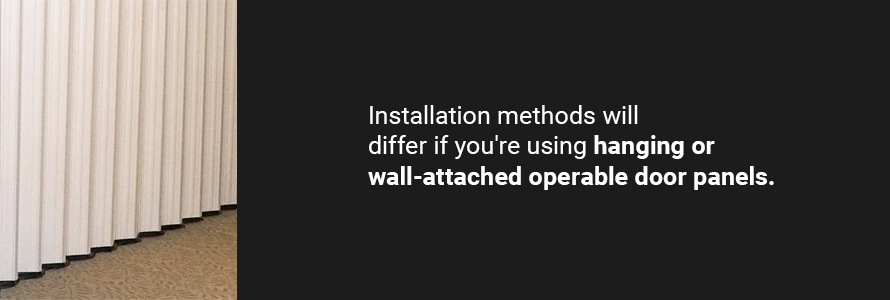
Installation methods will differ if you’re using hanging or wall-attached operable door panels. If you’d like to install hanging doors, you must drill the railing into the ceiling, then attach the doors. Should you be working on a wall-attached unit, take a look at these step-by-step instructions:
- Identify the wall mount side.
- Attach the top wall bracket.
- Install the bottom wall bracket.
- Lift the first panel into position.
- Attach the first panel to both wall brackets.
- Attach the rest of the panels, aside from the last one, to each other accordingly.
- Position the end panel perpendicularly.
- Attach the end panel.
- Open and close the wall.
How Do You Open and Close an Operable Wall?
Operable partitions are designed to open and close. Before opening or closing any panels, ensure the area is clear of any equipment that could damage the panels. When you’re not using your operable wall panels, you can store them in a stack or cupboard. Starting from there, move your panels into position using the following steps:
- Pull the first panel toward you.
- Move one panel at a time.
- Ensure all panels are straight.
- Set all the seals correctly.
- Reverse the process to close.
How Do You Uninstall an Operable Wall?
One of the best things about demountable partition wall systems is they can be temporary if needed. Uninstalling them is a simple process. Ensure you’ve removed all electrical cables and other hazards before you start. Follow these step-by-step instructions:
- Remove the trim.
- Score the seams if working with drywall.
- Unscrew the attachments.
- Remove the panels.
- Remove the wall mounts.
- Remove the anchor panel.
- Store the wall.
How Do You Maintain an Operable Wall?
Like any other structure, your operable wall system needs maintenance. Keeping it well-maintained gives it a longer life span, improves acoustic performance and keeps everything safe around the room. The best way to keep your wall system operating is to schedule professionals to perform routine maintenance on the system.
Some general guidelines for operable wall maintenance are as follows:
- Check the track system: Every six months, ensure the track system is level and the joints are aligned. Check for wear and tear, as you may need to replace them. Clean the inside flange of the track with a simple cleaner.
- Inspect the carriers: You may need to make adjustments every six months. Make sure the jamb or lock nut is still screwed in tight and the carriers are adjusted to the correct height.
- Go over the panels: Check your panels once a year for smoothness, working seals and damage to the trim or panel material. Clean all the rubber and vinyl parts with standard household cleaning products and some warm water.
- Clean all surfaces: At least every six months, clean all the surfaces and attachments and remove any dust or buildup. Use standard household cleaning products as needed.
If you’re uncertain about anything maintenance-related, consult a professional to ensure the longevity of your system.
Signs Your Operable Wall Needs Attention
Taking immediate action as soon as you see signs of wear and tear on your operable wall system can increase its longevity and effectiveness. Some of the signs that indicate your system needs attention include the following:
- Increased noise levels: If you notice more noise is making its way through the seals, they may need replacing. Check that all the panels are straight and everything is in place. If everything looks good and noise is still coming through, call a professional to come and inspect your seals.
- Difficulty moving the panel: Panels should move effortlessly along the tracks. If things get sticky and the track is clear, you may need to replace some parts.
- Sticky hinges: If you need to shake things around to open a partition, the hinges may be bent or broken.
- Unusual noises: A strange scraping or grating noise when you move the panels along the track is a sign there could be a problem. Check the track for debris. If there isn’t any, your wall needs attention. Try not to move the panels until a professional has checked them.
- Ripped or stained panels: Dirty panels may still operate perfectly, but they do detract from the aesthetic and should be replaced.
- Drag in the panels: There could be something wrong with the ceiling track if the panels are dragging when you try and move them.
- Bent or broken parts: If parts are visibly damaged, they can cause issues in your whole system. It’s best to replace them as soon as possible.
- Seals don’t set: If they’re no longer set, they could require replacements. Check that the panels are straight and try the seal a couple of times. If they’re still not set, call a professional.
- Lack of movement: Address panels that aren’t moving along the track as soon as possible. There are several reasons this could be happening. Don’t force the panel along the track — have a professional check it instead.
Learn More About Operable Wall Systems With Continental Door
If you’re in the greater Spokane area and interested in installing an operable wall in your garage, let Continental Door guide you through the process. You can trust our expertise — we’ve been at the forefront of commercial and residential garage door services for over 15 years and carry quality brands such as Clopay, Linear and LiftMaster, to name a few.
Browse through our movable wall options and find the best fit for your new and improved garage area. Feel free to contact us to learn more about what Continental Door can do for you.
Easy Home Renovations

Home renovations can provide many benefits to your property, like increasing value, enhancing curb appeal and offering more comfort to you and your family. Even minor renovations can make a huge difference. If your time and budget are a concern, options are still available to transform your property without significant work or preparation.
Easy Home Renovation Ideas
One of the first steps you should take to renovate your home is cleaning the space you want to improve. While decluttering can often offer a huge improvement in itself, it’s also essential prep work for almost every typical DIY project. Once you have the area clean and ready to go, your options are limitless.
Several quick and easy renovation ideas include:
- Adding a coat of paint to a room or space.
- Reorganizing your closets.
- Updating your kitchen and bathroom cabinetry with new hardware.
- Replacing the old trim on your windows and entry doors.
- Installing a new garage door.
How Do You Know When It’s Time to Buy a New Garage Door?
If you want to change the appearance of your garage door, a simple paint job might do the trick. Paint can sometimes make your garage door look close to new. However, it’s vital to consider other critical factors, like the age of your door, its performance and whether there’s any existing damage.
If your door moves slowly, has chipped or cracked panels or shows signs of wear, a replacement might be your best option. A new door pays itself off quickly by saving you money you would have otherwise spent on repairs. A new door can also deliver instant savings in your heating and cooling costs by providing a better seal.
On top of everything else, you can choose a style and color that will instantly transform the look of your entire property.
How to Choose the Best Residential Garage Door
Because garage door replacement is often a once-in-a-lifetime event, many homeowners lack the experience in choosing the perfect model. It’s crucial to explore several areas before committing to a purchase, including:
- Your budget.
- How you intend to use the door.
- Its operating frequency.
- The type of look you want for your property.
Once you’ve answered these questions, you can choose the material that best fits your needs, from aluminum and steel to wood and vinyl. Stylish and durable garage doors by Clopay® with design options like contemporary, traditional and carriage house can add a personal touch to your selection.
Home Renovations Made Easy With Continental Door
If you’re still unsure about the ideal garage door style, color or design for your needs, the professionals at Continental Door can help. Our team has decades of experience serving customers in Greater Spokane and North Idaho with reliable repairs and maintenance, new installations and home renovation advice. Contact us today to schedule a free estimate.
The Importance of Fire Door Drop Testing

If you own or manage a building containing fire-rated door systems, inspecting and testing each of the doors every year is mandatory. These systems can involve any opening in walls, ceilings or floors carrying a fire rating. Accurate inspections and tests ensure the safety of your building’s occupants while protecting and preserving personal property, reducing liability and meeting insurance requirements.
What Is NFPA 80, and What Does It Address?
The National Fire Protection Association (NFPA) is a worldwide nonprofit organization dedicated to eliminating injury, death and property loss due to fire, electrical accidents and other related hazards. NFPA 80 is a standard that regulates the installation and maintenance of fire doors and other openings that protect against the spread of fire and smoke.
The standard is specific to various opening types, including fire-rated sliding, swing and rolling doors, plus fire-rated windows. It offers guidance for fire detection placement and activation devices like smoke detectors and fusible links. NFPA 80 is critical for architects and building designers when choosing specific types of fire-rated doors and locations.
What Is Fire Door Drop Testing, and What Does It Entail?
Property owners must subject their fire doors to professional inspection and drop testing annually to comply with NFPA 80. The owners must also maintain an accurate log for these assessments and test histories. Besides ensuring the openings are fully operational, an inspector will check for surface breaks and holes, incorrectly installed components, missing smoke detectors and other inconsistencies.
The drop test entails two steps. The first step ensures your fire doors operate smoothly and provide full closure, while the second involves inspecting the automatic-closing devices to ensure proper resetting. Owners can immediately remedy any failures through repairs or replacement.
Why Fire Door Drop Testing Is Important
Fire door drop testing is vital because it determines whether your doors comply with required fire safety guidelines and regulations. Doors that endure frequent use often suffer adverse consequences from factors like dust, dirt and grease. Drop testing ensures your doors and the fusible links are able to provide the necessary protection and safety for those who occupy or frequent your building.
Fire door drop tests are also mandatory for obtaining the proper codes and licensing for new buildings or renovations.
Stay Safe With Continental Door Co.
Continental Door has earned the reputation of the most reliable and highest-quality garage door service provider in Greater Spokane and North Idaho. We provide top-tier customer service for all our residential and commercial products, including fire-rated doors and the standards they must meet. Connect with us online to learn more about what we do.
Dissecting a Garage Door Opener — How Does It Work?
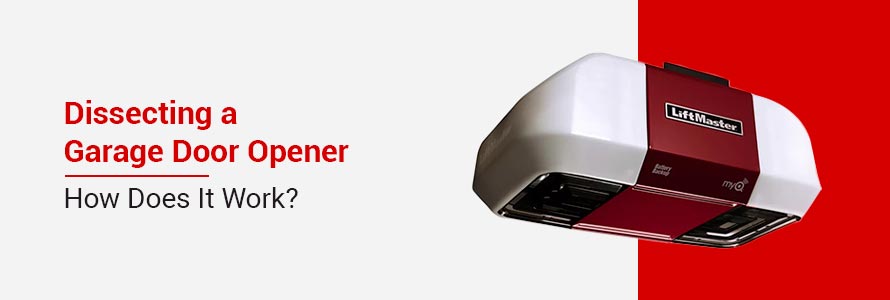
The garage door is an essential part of any home — it provides secure, easy access to the garage and ensures your car and belongings stay protected from theft and the elements. Opening and closing your garage four times daily adds up to almost 1,500 cycles a year. With all that use, a functional garage door opener is crucial to the operation of your garage.
Despite the importance of an automatic garage door opener, many homeowners fail to understand how the device works. Understanding how a garage door opener works will help you troubleshoot any issues your opener has and will allow you to keep your garage in top condition. Learn more about garage door openers, how they work and how to fix them with this guide.
Request Garage Door Opener Service
What Is a Garage Door Opener?
Garage door openers are standard features of modern garages — they make using the garage door simple and convenient for safer, faster home access. But what exactly is a garage door opener?
Garage door openers are motorized devices that open and close garage doors. They have a switch on the wall or a remote control that lets you open and close your garage door at the push of a button. Openers typically have automatic safety features like auto-reverse and motion detection to prevent accidents and protect the door and other objects from harm.

Types of Garage Door Openers
There are four types of overhead door openers that you might come across — each one is slightly different, so evaluate all of your options carefully to ensure you get the best opener for your home. The main difference between openers is the driving utility or how they run. Some use threaded parts, while others use belts or chains. All overhead door openers use a motor that moves a trolley that connects to the door to create movement.
Check out the different types of garage door openers:
Belt Drive
Belt drives use a rubber belt to slide the door trolley. The trolley moves the door open and closed with the help of the belt. Since the belt drive uses a rubber belt, its motions are smoother and quieter, and there’s less vibration compared to other drives. Belt drives have fewer moving parts than other drives like chain drives and need less maintenance to stay in top condition.
Belt drives are low-maintenance and quiet, making them perfect for any home. They’re especially great for homes with garages underneath bedrooms and living rooms since they produce minimal vibration and noise.
Screw Drive
Screw drive garage doors have a threaded-steel rod that moves the trolley. As the rod rotates, the trolley lowers and lifts the door. Like a belt drive, it also has fewer moving parts and requires less maintenance. This rod design of this drive means it’s quiet and has smoother movement than chain drives.
Like the belt drive, the screw drive is ideal for attached garages. They require less maintenance and produce less noise so household members won’t be disturbed by the opening and closing of the garage door.
Chain Drive
Chain-driven garage openers have a metal chain that drives the door trolley. Chain drives are usually the least expensive opener option, making them desirable for anyone on a budget. However, the metal chain the opener uses can be extremely loud, making this the noisiest garage opener option.
While the chain drive is inexpensive, its loud design best fits detached garages. Garages connected to the house are often close to living and sleeping areas, and the chain drive might disturb people in these spaces.
Side Mount Motor
The side mount motor is the most straightforward garage door opener. It has no belt, threaded rod or chain — instead, the motor directly moves the trolley to open and close the garage door. This makes for a quiet, streamlined garage door operation. With the fewest number of moving parts of all drives, it’s the lowest maintenance.
Due to its quietness, level of maintenance and the low number of moving parts, the side mount motor is perfect for all garages and homes. Regardless of your home or garage’s size and layout, the side mount motor is low disturbance and easy maintenance.
Horsepower Ratings for Garage Door Openers
Horsepower (HP) is the force that moves the garage door. The larger and heavier an overhead door is, the more force it needs to move. The size, number and weight of your garage doors determine the HP your opener needs to operate the doors smoothly and efficiently. HP for garage door openers usually ranges from ⅓ to 1 ½. Here’s a quick summary of HP and door size pairings:
- ⅓ HP: Single-car garages can get away with openers at the lowest end of the HP scale. However, getting a slightly higher horsepower than necessary can reduce the strain on your opener and make garage door operation easier.
- ½ HP: This amount of HP is enough to operate sectional two-car garages for everyday functions.
- ¾ – 1 ½ HP: For larger garages with high-tech overhead door openers, you’ll want ¾ HP or more. You’ll especially want to consider going above ¾ HP if you use your garage frequently.

The Anatomy of a Garage Door Opener
Just like the garage door itself, a garage door opener has its own specific parts. The different parts of the opener work together to ensure the smooth, safe operation of your garage door so that you have an accessible, convenient entrance to your garage. Understanding the opener’s components will help you identify issues associated with opener problems and gives you complete knowledge of all the parts of your garage.
Opener Remote
The opener remote activates the motor of the drive unit. Remotes can be hardwired to the inside of your garage or wireless, so you can automatically open your garage door with ease. Wired remotes stay connected to the garage through wires and allow you to open the door by pushing a button inside or outside the garage.
Numerical keypads require a code to open the garage door. Set a numerical code and punch it in whenever you need to get into the garage. The door will only open when the correct code is entered into the keypad.
Wireless remotes are kept in cars or on keychains — they let the owner open the garage door from up to 20 feet away. Wireless remotes are great for convenient car parking since you won’t need to get out of the car to open the garage door. There are also smart garage door openers that work from your phone, giving you the convenience of a wireless opener from your smartphone.
Drive Unit
The drive unit is the box installed in your garage ceiling. It’s the main part of the garage opener. Inside the box is the motor that runs your garage door opener and initiates the opening and closing movements.
Horizontal Track
The horizontal track guides the garage door as it moves, allowing your garage door to sit along the ceiling and move back down to close with ease.
Chain
The garage door chain does a bulk of the lifting and holds the weight of your heavy garage door as it moves. Once the motor starts running, the chain lifts your garage door and pulls it along the rail so that it moves along the ceiling.
Pick-Up Arm
The pick-up arm is a smaller component that helps connect the garage door to the garage door opener. A strut must be installed along the top panel of the garage door so that the pick up arm can connect to the door. The arm helps lift and guide the garage door.
Bracket
Your garage door needs something to connect it to the garage door opener. The bracket is the connector for the system. It sits on the surface of the garage door and the pick-up arm, joining the door with the opening system.
Photo Eyes
Photo eye sensors prevent the automatic garage door from closing on people, pets and objects. These garage door sensors help prevent the door from closing on anything. One sensor is installed at the bottom of the garage door. If anything breaks this sensor’s line as the door closes, the door will stop closing and roll back up.
The other type of photo eye sensor uses an unseen line to prevent accidents. The photo eyes sit along the vertical garage door track facing each other, projecting an invisible beam. If the beam is crossed during door closing, it will auto-reverse to prevent injury. Both sensors prevent people and objects from getting stuck under the heavy garage door and should be checked regularly to ensure they’re working correctly.
Emergency Release Rope
The emergency release rope is essential to the garage door opening system. The emergency release rope is a red rope that dangles from the garage pick-up arm. If your garage door opener ever malfunctions or stops working, you can still open and close the door with the emergency rope. If there’s a power outage or your system stops working correctly, you can temporarily use the rope to get around the problem.
Some garage doors also have a keyhole that lets you use the emergency release from the outside. To use it, insert and turn the key, then pull out to pull on the rope. After this, simply lift the garage door up.
How Does a Garage Door Opener Work?
There are many different parts to your garage door opening system which can make your opener seem more complex than it actually is. The overhead door opener is simply a radio transmission system. Pushing the button on your remote or typing the code into a keypad sends a code to the receiver. The transmitter and receiver are on the same frequency as each other, so the receiver only gets signals from its transmitter.

Possible Reasons Your Garage Door Opener Stops Working
Even with proper care, garage door openers can suddenly stop working. Finding the source of the problem can help you decide whether you need minor or major repairs and will help get your garage system working again. Follow these garage door opener troubleshooting tips to help narrow down the cause of the issue:
Dead Remote Batteries
If you’re pressing your opener remote, but nothing happens, its batteries might be at fault. First, try to open the door with the wall panel. If it opens and closes correctly, your remote’s batteries probably have died.
Remote Signal Blocked
Another reason the opener doesn’t respond to the remote is a blocked signal. If you’ve recently replaced the batteries on your remote, check to make sure it’s not a disrupted signal. To test this, stand less than 20 feet away from your garage opener. If it still isn’t working, examine the opener’s antennae. Clear out any debris from the antennae and ensure it’s unbroken and pointing towards the door. If you see antennae damage, contact a professional so they can evaluate the system.
Lock Button On
Another reason the opener might stop working involves your garage’s lock button. If the lock button on the wall-mounted panel is engaged, your opener won’t work. That can happen when someone accidentally engages the button while using the wall-mounted panel.
Garage Door Won’t Close Completely
Broken springs, damaged cables and blocked tracks can all cause interference that prevents the door from closing completely. Additionally, your door might not close due to malfunctioning sensors. If the safety sensors are misaligned or malfunctioning, they could register and object in the door’s path — even when there isn’t anything there.
What to Do if Your Garage Door Opener Stops Working
You can solve some of your garage door problems yourself. Contact a professional if smaller, less-dangerous fixes don’t work or you feel uncomfortable doing it on your own. Garage doors are extremely heavy, and their components are dangerous if you aren’t an expert at what you’re doing. Always turn to professionals for repairs to keep yourself and your property safe.
If you have minor garage door issues, you can probably perform the fixes yourself. Swapping out remote batteries, disengaging the lock button, removing objects from the door’s path and clearing debris from the garage tracks are easy tasks you can do on your own. You can also lubricate rollers and tighten loose nuts and bolts if you feel comfortable with your garage door.
Sometimes, however, the solution to your problem isn’t easy or obvious. Call a garage door repair service if you can’t find the source of the issue or if the fix is a bigger task than swapping out remote batteries. Garage door technicians have the skills and knowledge to diagnose and fix your garage door opener safely and correctly.

Explore Residential Garage Door Openers from Continental Door
Improve the safety and convenience of your Spokane, Washington home with Continental Door’s high-quality garage door openers. We carry a variety of Linear and LiftMaster openers, including MyQ-compatible models that connect to your smartphone. Along with our top-of-the-line garage door opener models, we offer 24-hour emergency garage door repair services to ensure you always have access to your garage.
With over 15 years of experience in garage doors, you can rely on our experts for better garage door security and services. To request a service or free estimate, contact us online and improve your garage door quality today!
Request Garage Door Opener Service
How Do Garage Door Springs Work?

A garage door spring is one of the most essential pieces of your garage door. Without them, your door wouldn’t be able to raise or lower, and you wouldn’t be able to move your car in and out. There are various different types of springs, but they perform the same primary function that lets you utilize your door daily.
Keeping your springs clean, maintained and lubricated will help them function correctly for smoother door operation. If you experience trouble with your springs, understanding the spring type and recognizing when they have met the end of their life span can help you get them back to proper function.
Request ServiceWhat Are Garage Door Springs?
Garage door springs are a vital part of your door system. These pieces counterbalance your door and hold it up, letting you open and close your door with ease. Without springs, your garage door would be useless. Instead of an entrance or exit for your car, you would have an unmoving piece of equipment that can weigh hundreds of pounds.
A damaged or broken garage spring can also make it challenging to operate your door. Without the proper tension to lift the weight, the other parts of your system must take on much more strain, resulting in further damage.

Types of Garage Door Springs
There are two primary types of garage door springs, and the type you have determines where you can find them on the door. They both perform the same function and are essential for smooth door operation. Some specific spring variations differ between residential and commercial doors.
Extension Springs
Extension springs are typically above the horizontal tracks or along the sides of the door. These springs contract and stretch to lift and lower the door. If you have an older door, you likely have these springs. Homeowners typically have one extension spring on either side of the door, but some commercial doors may have more than two to counterbalance additional weight.
Schedule Extension Spring ReplacementThese springs can be open-looped, double looped or have clipped ends, with open-looped springs being the easiest to replace and clipped ends springs offering the most extended lifetime of the three.
Types of extension springs include:
- Sectional: These springs are common in the United States. They stretch above and parallel to your horizontal tracks. The tracks transfer the weight to the cables when you open your door.
- One-piece: One-piece doors operate as one unit. Extension springs pull against a connection point to raise the door, and the bottom of the door rises outside of the garage.
Torsion Springs
Torsion springs are typically above the door in a metal shaft. Some doors may house the spring in the shaft, while others have a shaft that passes through the springs. These springs operate by holding and releasing the door’s tension with drums. When you open or close your door, torsion springs unwind and wind accordingly.
Schedule Torsion Spring ReplacementTypes of torsion springs include:
- Roll-up: These typically are for small warehouse doors. These doors use curtains to wrap around the drum when the door is lifted. The springs secure the outer-most drum to balance the door.
- Steel rolling: Torsion springs are inside the barrel of steel rolling doors, where a shaft supports them. You can adjust the tension in these springs to keep them secure using a winding bar.
Industrial and commercial garages typically have multiple torsion springs to account for additional weight. Standard commercial doors have torsion springs in a mixed, triplex, duplex or singular lineup:
- A singular wider door typically uses a linear system.
- A duplex system has a smaller spring inside the torsion springs.
- Triplex systems have two springs inside the torsion spring.
- Mixed systems are a combination of singular, duplex and triplex formations.

Garage Door Spring Color Coding System
Garage door guides typically come with a color-coding system to help you understand size measurements. Extension and torsion springs have different colors and meanings, so knowing your type will help you understand the color system.
Torsion springs use black and red to identify the wind directions and wire size. Red indicates the left wind and black indicates the right. Professionals can usually observe the gauge shape to determine the spring’s condition. Torsion springs also use a color code system to identify the size of the wire. You can find these measurements in inches or millimeters.
Extension springs have a more in-depth color system to determine lifting power. Your door’s weight affects the springs, and you need to ensure they provide enough power to operate smoothly. The lifting capacity of extension springs in pounds is as follows:
- Light blue: 190-290
- Gold: 180-280
- Orange: 170-270
- Brown: 160-260
- Red: 150-250
- Blue: 140-240
- Yellow: 130-230
- Green: 120-220
- White: 110-210
- Tan: 100-200
How Do Garage Door Springs Work?
Extension springs work with the door’s pulley system to lift. When a door opens, the cables running through the pulleys exert tension. The springs then contract to release tension and lift your door. When you close your door, the springs become fully tensed, ready to release tension when you open it again. The springs can stretch to about half your door’s height to ensure you can lift and lower it without the system exerting too much effort.
Garage door torsion springs work differently than extension springs. These springs are much thicker than their counterparts, and they work independently. Each torsion spring is measured explicitly for the thickness and size of each door to ensure consistent lowering and lifting. The torsion spring stores energy to operate the door and works with the cables to twist as the door opens. The spring unwinds and releases energy while opening and tightens when the door closes.
Garage Door Springs Lifetime
Even with the best care, your garage springs won’t last forever. Over the years, they’ll experience wear and tear that will affect how well they perform. You can get many years out of your springs if you keep them well maintained. Without proper lubrication, your springs may break sooner.
You can usually determine how long your springs will last based on the number of cycles they’ve performed. On average, springs perform around 10,000 cycles, which could last over ten years if you only use your garage once or twice a day. If you operate your door multiple times a day, they may not last as long.
Ways to maintain your garage door springs include:
- Cleaning debris: Dirt, grime and debris can quickly build up in your garage. This can make it much harder for springs to twist and turn, impeding their function.
- Lubricating moving pieces: Lubricating springs and other moving parts will help avoid rust and stiffness and prolong their life by keeping them moving correctly. Expect to lubricate your springs about twice a year.
- Replacing parts: Quickly replace parts any time you notice damage. If your springs have to exert or store more energy than they are meant to, they may snap.
- Scheduling maintenance: Calling professionals to investigate issues and make necessary repairs ensures your system works properly.
- Repairing leaks: If your garage is experiencing any leaks, humidity in the air increases, which can create rust on moving parts. Always investigate your garage after heavy rainfall and storms.
- Avoiding unnecessary use: Large families likely have more than one car in the garage. If your family uses the garage as your primary home entrance, you probably use it more than you need. Limiting use or keeping the door open if multiple people need to leave will help prolong the door spring’s life.

Signs Your Garage Door Springs Need Attention
If your springs are approaching the end of their lifetime, or you’ve noticed odd behaviors from your door, your springs might need some attention. There is no tell-tale sign that indicates you need to repair or replace your springs, but there are common indications.
Schedule Spring ReplacementSome common signs your door needs attention are:
- Loud snapping sounds.
- Slow opening times.
- Sudden or jerky door operation.
- An unbalanced door.
- Snapped cables.
- Gaps in the springs.
- Loud banging noises.
- Your door stops mid-operation.
- The door snaps shut when you close it.
- You can’t open your door at all.
Many of these problems you experience could also be signs your door has another underlying issue. Garage doors have many moving parts, all of which ensure smooth operation. Strange noises and jerky movement can result from worn rollers and hinges. Your tracks may also be bent, or some screws may be missing, making your door appear off balance. A professional will be able to identify the problem quickly.
What to Do When Your Garage Door Springs Go Bad
You may need to rebalance your springs within the first few years of having them. When your doors are opening, check to see if there is movement. Slight movement is normal, but if one of your bottom rollers moves past the tracks and stays there, you must re-tension your springs. For s second test, open the door halfway so it is suspended in mid-air. You have a spring problem if the door slams shut or snaps open.
It’s always a good idea to replace both springs when one breaks. After one goes, the other is likely to follow soon after. Since the springs have performed the same number of cycles, you won’t be able to get much more use out of the remaining spring, and you will have to call for another service to replace it. Additionally, replacing only one spring can cause the door to go off balance.
If you need repairs or replacements for your springs, it is always best to contact a professional to reduce the chance of injuring yourself or others. Broken springs can be very dangerous and puncture nearby people or objects in the nearby area. You should never operate your door if your springs have snapped or broken.
Why You Should Call a Professional For Repairs
When you have trouble with your springs, it is always better to call a professional rather than try to install, repair or replace them yourself. Your door may weigh hundreds of pounds, and if your springs can no longer support it, it can snap shut and crush anything underneath it.
Additionally, broken springs can become projectiles. With so much stored energy and tension, when these pieces snap, their energy causes them to fly through the air without direction. Objects inside your garage can become punctured, including yourself. It’s possible to break fingers or crush feet when working on a garage door if you don’t know what you’re doing.
Finding the correct replacement springs can also be a challenge. Because springs have an in-depth color-coding system, it’s crucial to refer to these to find the right wire size that can hold your door. Locating and installing the correct spring is much easier with the help of a professional. Professionals can also calibrate your springs to ensure they can maneuver the door up and down, eliminating jerky movements that can damage tracks and other parts, costing more in the long run.
If you try to repair or replace your springs yourself, you will first have to be sure you have the proper tools. If you don’t, you’ll have to buy them and find a place to store them afterward. Professionals already have an arsenal of tools to tackle your problem. Additionally, if you use the wrong pieces or install parts incorrectly, you may end up breaking other door parts and costing yourself a more significant expense in the future.

Schedule a Service With Continental Door
Continental Door repairs, sells, installs and replaces garage door springs for homeowners and commercial organizations in the Spokane, Washington area. We have over 15 years of experience in the industry, and we take pride in our work. We have been offering the highest quality in the industry since 2001, tackling each unique problem with individualized solutions and creativity to fit your budget and meet your needs.
We know how important your garage door is for your productivity and efficiency. Your door should make your life easier, not harder. Continental Door is your one-stop shop for garage door solutions, so you can get your door running in no time.
Our growing team meets every client with professionalism and dedication. Your satisfaction is our top priority, and we want to help you get the most from your garage door. Keeping your springs in good condition is essential for your door to lift and lower smoothly, and we know how to fix or replace them quickly so you can get back to your day without interruptions.
You can easily request an estimate or schedule a service with us. For more information about our services, contact us online or give us a call at 509-921-2260.
Schedule ServiceBenefits and Advantages of Wood Garage Doors
Many different garage door materials are available for a brand-new residential garage door. Wood doors offer plenty of advantages to your home, increasing resale value and enhancing its overall curb appeal. Check out the benefits of a wood garage door to determine if it’s the right fit for your property.
Benefits and Advantages of Wood Garage Doors
Wood is a timeless, energy-efficient material that can accommodate any budget. Check out these pros of wood garage doors to learn more about why you should invest in one for your property.
1. Wood Garage Doors Come With Custom Design Options
One of the most appealing features of wooden garage doors is that they come in various styles and colors to complement the outside of your home. Authentic wooden panels have unique graining patterns as special as a human fingerprint. Choose from a wide selection of colors, finishes and panel styles that go with your home’s architectural design.
Wood is also easy to paint or stain if you’d rather have a non-natural color. Consider making your garage door the same color as your entry door to complete your house’s overall aesthetic.
Besides colors, wood garage doors also come in custom sizes and panel shapes to create whatever you need for your home. If you can imagine it, a garage door professional can design it. Wood complements various architectural designs, from traditional to contemporary to modern. Since wood tends to have a timeless design, it’ll always be in style.
2. Wood Garage Doors Are Affordable for Any Budget
Since wooden garage doors offer many customization options, they’re available at different prices. Lightweight doors tend to be less expensive, while sturdier, more durable doors come at a higher price. Either way, you can find a high-quality, affordable garage door made of wood, no matter what you’re looking to spend.
Even if you choose a higher-end wood garage door, you’ll end up saving money in the long run. Wood garage doors of all varieties are durable, and it’s easy to replace one broken panel instead of changing out the entire garage door.
The material itself is also a natural insulator, so it’ll regulate your home’s temperature and save you money on energy use. A wooden door can also save money because it stays in style and can withstand most damage, so you won’t have to replace it as often as other types.
3. Wood Garage Doors Are Resistant to Dents and Easy to Replace
Wooden garage doors are usually resistant to wear and tear, such as dents, scuffs or dings, because of their resistance to impact damage. As long as you maintain your door throughout the years to protect it against moisture and other types of weather, it can look new for a long time and hold up against the elements of your local area.
Besides their resistance to wear and tear, wooden garage doors are also easier to repair. Some garage door materials require a whole door replacement if there’s any sign of damage. On the other hand, an expert technician can fix part of your wood door without investing in a brand-new one.
4. Wood Garage Doors Are Ecologically Friendly
Wooden garage doors are an eco-friendly choice for garage door material. Wood is renewable, naturally occurring material, so having a wooden garage door has a positive impact on the environment. Since wood garage doors last a long time, you can keep the same garage door instead of using more resources to create a new one.
Garage door manufacturers should follow “green” guidelines to ensure that they make the best use of their resources. Discuss your options for eco-friendly wood with your local garage door distributor. You can have peace of mind that your wooden garage door will reduce the size of your carbon footprint.
5. Wood Garage Doors Feature Natural Insulation
Besides being made from an eco-friendly material, wood garage doors are also energy efficient. Even though wood naturally insulates your property, garage door manufacturers also add layers of polyurethane or polystyrene insulation between two wood panels to enhance the door’s energy efficiency. Along with the energy savings that come from investing in an insulated wooden garage door, this material also puts less strain on your HVAC system.
If you’re looking for an energy-efficient door, go over your insulation options with your local garage door distributor. Since your garage door will have extra insulation, your garage and ultimately your entire living space will be more comfortable throughout the whole year. You can also have peace of mind storing temperature-sensitive items in your garage with an insulated garage door.
Choosing Continental Door
Continental Door is a commercial and residential garage door distributor in the Spokane, WA, area. We provide the following Clopay® wooden garage door collections for your selection:
- CLASSIC™ WOOD: Clopay’s CLASSIC WOOD garage doors feature beautiful natural wood, including cedar, hemlock or redwood construction. Each door is handcrafted with flush, traditional raised or recessed panels that complement your home’s architecture and design. Choose a door with a color and style that enhances your property’s curb appeal.
- RESERVE® WOOD CUSTOM series: Our RESERVE WOOD CUSTOM garage doors give you the utmost freedom to create the wooden garage door of your dreams. Sketch a design of your door with the color, windows, size and style you desire, and we’ll make it happen.
- RESERVE® WOOD LIMITED EDITION series: The wooden carriage house garage doors in the LIMITED EDITION series blend the convenience of an automatic overhead door and historical charm. Choose from eight carriage house designs in one of many wood species, colors and window panels to complement your home’s traditional or Craftsman architectural style.
- RESERVE® WOOD MODERN series: Our RESERVE WOOD MODERN garage door series features simple forms and clean lines to accent the wood’s natural beauty. Combine different tones, materials and shapes to design an eye-catching contemporary garage door that complements the wooden decorative elements throughout your home’s exterior.
- RESERVE® WOOD SEMI-CUSTOM series: The wooden garage doors in the RESERVE WOOD SEMI-CUSTOM series feature authentic carriage house styles designed by hand to provide your home with an automatic overhead door with old-world charm. Choose from three wood species, six carriage house designs and several window shapes to complement your home’s exterior.
To try out different styles or to envision how your new garage door will look on your home, use Clopay’s innovative EZDoor™ tool.
Contact Us to Learn More Today
A brand-new wooden garage door adds value to your home because of its warmth, timeless beauty and cost-effectiveness. Continental Door offers many different garage door types for homeowners in the Spokane, WA area. For more information about our inventory or to request an estimate, contact us online or call 509-921-2260.
How to Maintain Your Coeur d’Alene Garage Door

Your garage door makes up as much as a third of your home’s exterior, and most of the time, it goes unnoticed. A few pieces of regular maintenance can keep your door running smoothly and return massive benefits.
A properly fitted and functioning garage door keeps your home safer. Ensuring a proper seal prevents rain, snow and small creatures from finding their way into your garage. Maybe most importantly, maintenance also helps you avoid costly future repairs.
Helpful Tips to Maintain Your Garage Door
When it comes to anticipating your door’s maintenance needs early, the first key is to pay attention. Keep your eyes and ears open when you use your garage door. Is it still moving smoothly? Does it operate quietly? Does everything seem to be placed properly and symmetrically?
The second key is to make sure you’re staying on top of regular garage door maintenance. Here are five things you can do to extend the life of your door.
1. Examine and Tighten the Hardware
As your garage door opens and closes, the movement causes vibrations that can loosen screws and bolts over time. Check the tracks and hinges and use a socket wrench to tighten up any loose ones you find. Be sure not to over tighten them.
You should also check for bent hinges that need to be straightened or replaced. You can replace the hinges yourself — be sure that the door is locked in the “down” position and only remove one hinge at a time — or call a professional to replace them.
2. Test the Balance
Make sure your door is balanced correctly to get the longest possible life out of its parts.
Disconnect the door from the opener and ensure you can only open it manually. Then, open the door halfway and release it.
A balanced door will stay in place. If it slips down, there is likely an issue with the springs. Make a service appointment with a qualified professional to have them repaired or adjusted.
3. Inspect Rollers and Cables
You should inspect the rollers, or the wheels that run along the tracks, twice a year. Damaged rollers can wear out your opener, so it’s best to replace them at least every seven years, though they may need replacing sooner. Check for bent shafts, worn-out bearings or broken wheels. You can remove and reinstall any roller brackets that aren’t attached to the cable system.
Regularly check the door’s cables for wear, especially near the bottom roller bracket. If you find any rust, damage or frayed strands, always call a qualified professional to repair or replace them.
4. Lubricate Moving Parts
Another twice-a-year task you can do to keep your garage door running smoothly is to lubricate all of the moving parts.
Use white lithium grease for the screw or chain in your opener. You can use a simple spray lubricant for all other parts. It’s best to use something formulated for garage doors rather than an all-purpose lubricant.
When it comes to the rollers, it’s important to remember that you should only lubricate steel rollers.
5. Clean the Tracks and Door
Clean tracks will keep your rollers in shape and help your opener run smoothly. You can use a Shop-Vac to clear away loose dirt and debris, then wipe the components down with a damp cloth or shop rag.
You’ll also want to make sure the door itself stays clean to maximize your curb appeal. Regularly check for peeling or chipped paint, rust spots or water damage. To keep it looking its best, wash your garage door with a gentle all-purpose cleaner whenever you wash your car.
Choosing the Best Garage Doors in Coeur d’Alene, Idaho
The right garage door will enhance the beauty of your home while also increasing its value. Beyond the boost in curb appeal, an expertly installed high-quality door will help keep your home secure. The precise fit and built-in insulation will even keep your energy costs down, keeping your home warmer in winter and cooler in summer.
If you’re looking for a new garage door, Continental Door has Coeur d’Alene’s best selection of Clopay® doors. Our specialists will work with you to determine your budget, needs and design preferences and help you find the perfect garage door to fit your home.
Whether you want a contemporary or vintage design, clean simplicity or nostalgic inspiration, you’ll find what you’re looking for at Continental Door. We have a variety of materials to suit your preferences, including doors made of:
- Wood
- Steel
- Glass and aluminum
- Multi-layer composites
You can also customize your door to your specifications. Choose the color, window style and hardware design that will suit your new door best and make it truly yours.
Your Source for Garage Door Openers in Coeur d’Alene
Once you’ve found your perfect door, you’ll need a high-quality garage door opener to keep it working at peak performance. Continental Door has a selection of the best brands, including Linear® and LiftMaster®.
Powerful and quiet, Linear garage door openers are a safe, home-friendly choice. They use radio frequency remote controls to keep noise and vibration down even when lifting heavier doors.
LiftMaster garage door openers are energy efficient, durable and convenient. These openers come equipped with MyQ® technology, which can let you use your smartphone or smartwatch as your garage door opener. The MyQ® app also connects to other smart home devices.
Continental Door: Your Coeur d’Alene Garage Door Experts
Our team is here to do more than sell you doors. We’re also here to help with what you need. We have all the skills and resources to be your primary source for garage door services in Coeur d’Alene, with:
- Installation: Continental Door’s installation experts are here to install your beautiful new door, even if you bought it somewhere else. We’ll also haul your old door away after your installation’s finished.
- Service and repair: While you can handle aspects of your garage door maintenance yourself, some areas require an expert. For your safety, you should always call a qualified professional for issues with bent tracks, springs or cables. A Continental Door, we offer repair services for both garage doors and openers, as well as 24/7 emergency garage services in Coeur d’Alene.
- Parts in stock: Our service team keeps a supply of the best-functioning parts so we can get your repairs started right away. We have the hardware, motor parts and drive components to get your door or opener up and running right away.
Contact Continental Door, Co. for Garage Door Services
Whether you’re in the market for a beautiful new garage door or looking for the best Coeur d’Alene services for repairs or installation, Continental Door is here to help. Check out our selection of Clopay doors to find one that’s perfect for your home.
Questions? Give us a call at 509-921-2260, or you can contact us online. You can also request a free estimate or fill out a service request on our website.
Adding a Security Gate to an Existing Driveway
Adding a Security Gate to an Existing Driveway
Have you ever thought about customizing your driveway but are at a loss about what you should do? Do you want something functional, stylish and secure? If the answer is yes to either of these, then you need a security gate. Take a look at some of the reasons why a security gate is right for you.
Table of Contents
- Why Add a Driveway Security Gate
- Automatic vs Manual Gates
- Security Gate Materials
- Costs of Adding a Security Gate
- DIY vs Professional Gate Installation
- Security Gate Accessories
Why Add a Driveway Security Gate to Your Home?
There are four reasons why you should consider a security gate:
- Security and privacy: Security gates give you added security. It protects against stray animals, prevents uninvited cars from entering and can deter some intruders. You’ll be much safer inside your security gate with added privacy. If you have kids or animals of your own, the gate keeps them inside, safe and sound.
- Custom style: Security gates let you customize the look and feel of your home. They improve the overall appearance and aesthetic without removing the focus from your home. You can add your family’s initials, alter the color and choose the type of fence that connects to your gate. You can opt for a simple and functional gate or install one that gives your home some extra beauty.
- Curb appeal: Even though you may personalize the security gate to reflect your preferences, it will always add to your home’s curb appeal. Immediately after installation, your home will have a greater appeal as the security gate draws in more intrigue.
- Resale value: With the added charm, beauty and extra security, these features contribute to your home’s overall value. If you ever find yourself in a position to sell, your home will be worth more, thanks to the security gate.
Automatic vs. Manual Driveway Gates
When choosing which type of security gate to install, you have to decide if you want an automatic or manual gate:
- Manual: Manual gates require you or someone else to open the gate physically. You will have to step out of your car every time you wish to leave and enter the driveway. You will have to unlock the gate, move the gate, move your vehicle, put the gate back and lock it. The steps are numerous, but the added effort comes with a price decrease.
- Automatic: Automatic driveway gates take the physical labor out of having to open the gate. With the push of a button, you can easily open and close the gate whenever you choose. With some gates, you can have a sensor installed, so it opens automatically without the need for a button press. Likewise, you can get ones that have buttons inside the house to automatically open and close from the comfort of your home as guests arrive.
Both gates have the same styles, materials, designs and other characteristics. The only difference is the way you open it.
Security Gate Materials Used in Driveway Gates
Once you’ve decided on the mechanics of your gate, you will have to choose the material. Usually, security gates come in three types of materials — metal, wood or composite:
- Metal: Metal gates are the most common for residential homes that want to give their home more style. The bars lack privacy, but you can customize them how you want.
- Wood: Wood gates contrast well with farms and other open areas. Because of the thicker pieces needed to reinforce the gate, wooden gates offer the most privacy.
- Composite: Of the three, composite offers the most privacy with the added aesthetic of wood. These gates are made with solid pieces with very minimal gaps in them. That said, they are the more expensive option.
What Are the Costs of Adding a Security Gate?
When you do decide to have a security gate installed, the price will vary depending on the characteristics you choose. Prices will vary depending on several conditions, such as:
- The size of the gate.
- The type and amount of material used.
- The gate supplier or manufacturer.
- Professional installation.
- Ongoing maintenance.
The size and material you use for the security gate drastically affect the price. If you have a large property you want to enclose, it will cost more than a smaller one. If you prefer a composite gate over a metal one, you might find yourself spending more.
The supplier refers to the company you receive your supplies from. Once you know that you want to have a metal security gate, you can begin looking for suppliers that offer the materials and compare the price. Depending on the supplier and your project, you might spend more or less.
You need to decide who is going to install the gate. Will you do it? It won’t cost you labor, but you will have an unprofessionally installed gate. Professional installation is more expensive, but it guarantees a high-quality security gate.
DIY vs. Professional Driveway Gate Installation
If you feel up to the challenge, you are more than capable of installing your security gate. You just have to buy the materials and get to work. While the offer might be tempting, you should consider having a professional team install your gate.
Professionals know the ins and outs of security gates. They know what materials to use and can safely and effectively use the necessary tools. Using professionals provides you with more customization and design options. They will install the gate correctly the first time, so you don’t have to worry about costly fixes in the future.
Security Gate Accessories to Consider
Accessories are always a fun addition to any gate. Whether you choose to add them during or after installation, they can make your gate more secure, stylish and convenient. You can add cameras for added security to always know who is at your gate. Alarm systems alert you if someone tries to tamper with the gate. You might also want to opt for remote access, which makes entering and leaving even easier.
All of these accessories come at an extra cost, but they make your security gate experience more convenient and give you added peace of mind.
Contact Continental Door Today to Learn More
If a security gate is something you’ve been wanting, but you don’t know where to begin, contact Continental Door today to request an estimate. We will install and service your automated security gate for your driveway and help make your life and home more secure!
Home Safety When Going Away on Vacation
Your home security while on vacation is crucial, but it doesn’t have to be stressful. Whether you’re preparing for fires, storms, or property crimes, we got you covered. We’ve outlined some of the best practices for you so you can vacation-proof your home for when you’re gone. In this guide, you’ll find the best practices for:
- Securing your garage door for vacation.
- Protecting your home from flooding.
- Protecting your home from storms.
- Protecting your home from fires.
- Other ways to protect your home.
When it comes to protecting your home when you’re on vacation, no risk is worth taking. That’s why we recognize the importance of securing your property while you’re away. Unfortunately, Greater Spokane has one of the highest national property crime rates. An estimated 9% of all break-ins are through the garage door, but theft isn’t the only potential threat. So, how can you protect your home while on vacation?
Secure Your Garage Door for Vacation
Secure your garage door by setting the opener to vacation mode. Vacation mode locks down the receiver on your device, preventing anyone from accessing your garage door from the outside. While not all garage door systems have this feature, you’re in luck if you have a LiftMaster system. LiftMaster systems have a lock button on the wall-mounted switch that disables the garage door opener while you’re on vacation.
To activate your Liftmaster’s vacation mode, press and hold the lock button on the wall-mounted receiver for three seconds and the LED light on the operator will blink rapidly. If done correctly, the wall-mounted receiver will continue to work, but all remotes will be blocked. To disable, repeat the process until the LED is solid again.
If you don’t have access to a vacation mode feature, you can alternatively disable the power to your garage door opener.
If disabling the power isn’t right for you, consider a wireless garage door opener. Many wireless opener options offer smart capabilities for enhanced security and a richer homeowner experience. The LiftMaster myQ enabled owners are among the best at enhancing homeowner connectivity. LiftMaster MyQ enables homeowners to check the status of their garage door remotely from anywhere, while also enabling security syncing with popular home security systems from Ring, Key by Amazon, Nest, Xfinity and Honeywell Total Connect.
The last step in securing your garage before going on vacation is to enable your garage door lock. Don’t have one? LiftMaster has you covered with a wide range of automatic garage door locks that offer enhanced security with ease, so you don’t have to sacrifice your peace of mind for extra security.
Protect Your Home From Flooding
Water damage is every home owner’s worst nightmare, but there’s no need to worry with the right preparation. Here are some things you can add to your pre-vacation checklist to secure your home while you’re gone.
1. Turn Off the Water Supply
The water supply should be the first thing you should secure before leaving. Locate the supply valve, and close it. Then, run a faucet or shower to test that it’s secured properly. If a situation arises when you might need water — for example, if you have sprinklers — you can turn off the supply value to major appliances such as toilets, refrigerators, washing machines and dishwashers.
2. Inspect Your Sump Pump
Before leaving for vacation, test your sump pump. The testing method will vary depending on the model of your pump, but be sure to manually check that it can drain when necessary. If your sump pump fails while you’re away, be sure to inspect your basement for any water leaks or damages and contact the appropriate restoration professionals to prevent any more damage.
3. Clear Gutters and Downspouts
To prevent any water build-up near your home, be sure to get out that step ladder you borrowed from your father-in-law four years ago and check that your gutters are clear of any obstructions and water flows properly. Be sure to make the same inspections to your downspouts and ensure the water is draining properly, a minimum of ten feet away from the house to prevent any foundational damage.
4. Seal Cracks
Lastly, inspect your home for any cracks and be sure to seal them properly. Address any cracks and use the appropriate materials to fill them. Hydraulic cement and waterproofing paint are popular basement preparation options. In addition to cracks, make sure all weather stripping is installed correctly and replace any damaged pieces.
Protect Your Home From Storm Damage
It’s always a good idea to check the forecast before you leave. Make sure your foundation, roof and other key components of your house have been recently inspected and any necessary repairs have been made. If your home has shutter windows make sure to secure them properly.
To protect the outside of your home, bring in any non-essential yard items and decor. Your garage door can be a serious liability if not storm-rated, so make sure yours is. Lastly, properly secure any hardware necessary to prevent blow-ins and ensure it’s in good working condition.
Protect Your Home From Fire
When living in Spokane, WA, the threat of fires comes both internally and externally. To prevent electrical fires and other combustions inside your home, spot-check all outlets and make sure appliances are unplugged. Leave all lights turned off and make sure no exposed outlets or electrical appliances could be exposed to water.
For the outside of your home, fire preparation begins with cleaning. Get rid of exposed combustible materials, including plant matter. If your home has trees and bushes, keep the branches trimmed and make sure your landscape is designed with the threat of fires in mind. If your lifestyle includes firewood, be sure that firewood piles are a minimum of 30 feet away from the house.
Other Ways to Protect Your Home While on Vacation
There are more ways to protect your home and when it comes to the safety of your home, it’s better to be over-prepared. Here are some ways to secure your home while you’re away on vacation.
Try Smart Lighting
Smart lighting is an underappreciated tool for deterring threats. Many smart LED lighting solutions will be able to connect to your phone wirelessly for you to control while you’re away. Even better, some smart lighting options have a vacation mode that will automatically turn on your lights when you aren’t home to deter threats.
Implement Home Alarms
If your neighborhood is experiencing break-ins and thefts, consider beefing up your home security with a residential security camera system paired with a home alarm system. Communicate your vacation plans with your security company to utilize their protection. Many home security systems offer additional sensors that can help you monitor your home so you don’t have to worry about anything. If necessary, establish a backup device for securing your home’s security footage if your phone might encounter issues.
Don’t Broadcast Your Plans
It’s totally normal to get excited about your vacation plans and want to tell everyone about your trip. Consider waiting until your return to announce your vacation and share photos online. Alerting people that you won’t be home for an extended period could pose potential risks to your home security.
Ask Neighbors to Check-In
It’s also a good practice to let a trusted neighbor know you will be out of town and to ask them to check in on your house periodically. With tools like the LiftMaster myQ, they don’t even need a key — you can let them in with a smart opener, so you can mitigate every possible risk.
Close Blinds
Natural lighting is always a blessing to any home, but if you plan on leaving for vacation, consider closing all blinds so nobody can see in. In doing so, you prevent potential thieves from snooping on your valuables.
Remove Spare Keys
Now’s the time to take that spare key out from under your favorite hydrangea. Even if you think nobody will find it, don’t give anyone a chance. If having a neighbor check-in, utilize the LiftMast MyQ for keyless entry, or hand-deliver the key to your neighbor to hold onto.
Pause Mail Delivery
After contacting your security provider, contact the post office to temporarily stop your mail. Having mail stacked up in your mailbox or leaving unclaimed packages on your doorstep could put you at risk of falling victim to property crime.
Contact Continental Door Co. Today
We value your home safety at Continental Door. Invest in your home with garage door services and installation to ensure your garage is strong and safe. Or take the next step to regain the peace of mind you need for your upcoming vacation by upgrading your modern security features. To get started vacation-proofing your home, contact us and get a free estimate.