Manual Garage Door Security
Manual Garage Door Security Solutions
We live in a time when technology has automated many aspects of life, from your car’s transmission system to daily household operations. Garage doors are one of the areas that enjoy automation because nowadays, they come fit or designed to operate with garage door openers. These devices use electricity to open and close the garage door, and some come with a battery backup.
However, in the event of an extended power outage where the battery runs out, you’ll need another way to lock your garage door because the opener doesn’t work. This guide shows you how to lock a garage door manually.
How to Lock a Garage Door Manually From the Inside
It’s easy to manually lock garage doors from the inside if they already have a built-in locking system that serves as a backup when the door opener stops working. If your garage door has a built-in lock, simply slide the locking mechanism into place to prevent the door from opening from the outside. Before engaging the lock, however, disconnect your door opener so you can manually open and close the garage door. Doing that prevents automatic operation while the manual lock is in place, which can damage the door.
If your garage door doesn’t have a built-in locking system, you’ll need to install a manual feature. This can be as simple as inserting a padlock or zip tie through preexisting holes in the track. If you can’t find any holes in the track, you may have to drill them yourself to allow different locking methods, such as a padlock, a clamp or a slide lock.
It’s advisable to let a professional install a manual lock on your garage door to enhance security and prevent accidental damage to your door. As you wait out a power outage or repairs to your garage door opener, try a temporary locking solution like a C-clamp or vice grips. To lock a garage door manually from inside, stick the C-clamp on the track to prevent sliding.
How to Lock a Garage Door Manually From the Outside
Use a quick and easy solution like installing a hasp where the door touches the ground, and secure the garage door with a padlock. You could also weld loops on both sides of your garage door and secure it with strong padlocks if it’s a metal door. For wooden garage doors or those made from other materials, you could install a garage door kit since it comes with a key that allows you to lock and unlock your garage door from the outside.
There are two phases to installing a garage door kit. The lock has assemblies that you attach inside and outside the garage door. You first drill precise holes on the outside to drive the screws that hold the handle in place and then fit the matching assembly on the inside.
Installing a lock assembly on your garage door will allow you to lock it from the outside, but it can be a complex process as it requires exact measurements for proper installation. It’s best to let garage door service and repair experts handle the installation.
Types of Manual Locks for Garage Doors

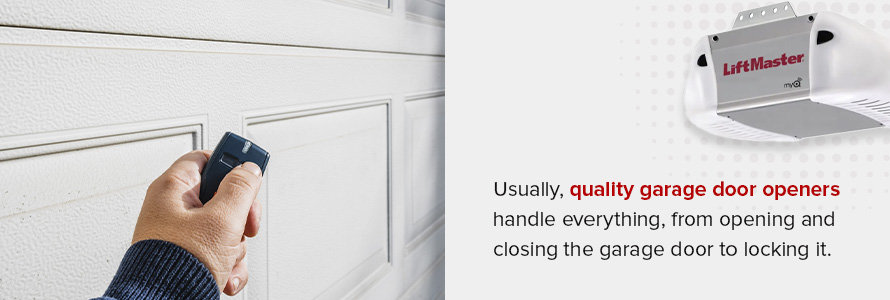
Usually, quality garage door openers handle everything, from opening and closing the garage door to locking it. With that automatic feature unavailable, you’ll need to install a manual locking system. Here are common types of manual locks you can use:
1. Slide Locks
Slide locks function the same way as deadbolts but are a heavy-duty option for manually locking a garage door from the inside. You install a slide lock by screwing it at the edge of your garage door and making a hole in the tracks where the lock’s metal bar goes through. Since you need to push the bar through the hole in the tracks, you can only operate a slide lock from inside your garage.
2. Deadbolt Locks
Deadbolts are secure locks that drive a bolt into a hole in the tracks. They can be keyed or keyless. Keyed deadbolts require a key to activate the bolt, meaning you can install them on the outside. However, you can only operate a keyless deadbolt from inside your garage because you need to push the bolt into place to secure the door.
3. Keyed Locks
Keyed locks are some of the most effective in the market, ranging from traditional to modern and sophisticated ones. The most basic keyed locks are padlocks, which you can use to secure your garage door from the inside and outside. Their main advantage is that they are simple and effective once you make holes or hoops to run them through.
The more sophisticated and reliable keyed locks are T handles and L handles, which you assemble on both sides of the door to allow locking and unlocking from the outside. These locks are stronger and more challenging to intruders than padlocks.
Common Lock Issues and Troubleshooting
Manual garage door locks can experience problems even if they don’t rely on electricity. Here are common issues you may notice with your manual locks:
- Misalignment: Garage door misalignment is a common issue that may occur due to damage or aging. A misalignment can also shift your manual lock out of position. Check and tighten loose screws or correct the misalignment to resolve the issue.
- Key issues: Challenges with keyed locks include breakage and the inability to turn the key properly inside the lock. You may use a tool like long-nose pliers to remove the broken key stuck inside the lock. Lubricating the lock will also help you turn the key with ease.
- Corrosion and rust: Since your garage door is exposed to the elements, the manual lock mechanism may show signs of corrosion and rust, which can damage the lock over time. Clean the lock to remove dirt and debris, and use recommended rust removers to eliminate rust. You may also lubricate the lock to prevent further corrosion.
Frequently Asked Questions
Here are some FAQs about garage door locks:
Can You Lock a Garage Door Without Power?
If your power is out and you need to lock your garage door quickly, unplug the door opener and pull down the emergency release cord to put the door into manual mode. Then, find any type of clamping device and attach it to the tracks on top of the roller to prevent the door from going up.
How Do I Switch to the Automatic Lock?
Switching back to the automatic feature allows your door opener to operate its automatic lock. Pull the emergency release cord down and forward toward the door, and it’ll reengage the door opener. On your wall station, press the button to open the door. It’ll click and lift the door. The automatic lock will function normally the next time you close your garage door.
Improve Garage Door Security With Continental Door
Knowing how to manually lock a garage door is important because you never know when the need will arise. You can use the temporary clamping-the-tracks method to keep your garage safe. However, you may want to invest in a professional installation as a permanent solution.
Work with a reliable garage door company like Continental Door for services you can trust. If you’re a resident of the greater Spokane area, contact Continental Door for professional assistance!
How to Change a Garage Door Opener Code
How to Change And Set a Garage Door Opener Code
If you have a garage door opener, you probably enjoy the incredible ease and convenience it provides. Most of the time, you probably use a remote control or digital app to open and close your door without difficulty, but if you need help programming or changing a keyless entry PIN code, here is a basic rundown.
Contact UsHow To Set Your Garage Door Code
Follow these four steps to change a garage door opener code through keypad reprogramming:
- Find the “Learn” button: You’ll find this button on the back of most garage door openers.
- Reset the code: To change a garage code, you first need to clear existing codes from the unit’s memory. You can erase the memory by pressing and holding down the “Learn” button until the indicator light next to it turns off.
- Enter your new code: Press the “Learn” button again and hold it down until the light turns on. You will have 30 seconds to input the new code and press “Enter.” The light should go off, indicating that you have successfully programmed the code.
- Test the code: Enter the code on the garage door keypad and wait for a response. If the reprogramming is successful, the door should open or close.
If the remote does not work after you attempt to change a garage keypad code, an error during the setup, like holding the “Learn” button, can be the cause. The button is responsible for programming and erasing linked remotes — holding it down can have the opposite effect. Try repeating the steps for changing a garage door code and note how long you press and release the “Learn” button.
How To Change Your Garage Door Code
- Enter your existing PIN: After entering your current PIN, hold down the # key.
- Enter new PIN: When the light blinks, release the # key and type in the new PIN. The light should blink again to indicate a successful PIN change.
- Test the new code: Wait 10 seconds, then input your PIN code and press enter. The door should now open or close.
Access Code Management
Managing garage door access codes involves regularly and securely changing them, using unique and hard-to-guess combinations and limiting the number of people who know the code. It’s also crucial to maintain control over who can access your garage door to protect against potential security vulnerabilities.
How To Set a Temporary Garage Door PIN
In some circumstances, you might set a temporary PIN to allow guests or service workers to access to your home without giving away your permanent PIN code. Setting a temporary PIN is simple:
- Type in your PIN and hold down the * key. When the light blinks three times, release the * key.
- Enter the temporary four-digit PIN of your choosing. The opener light should blink four times.
- Set the parameters for the temporary password. For time, type in the number of hours you want the PIN to work for and press *. For quantity, type in the number of times you want the password to work and press #. The highest number you can choose is 255. The light should blink once.
- After 10 seconds, test the opener. Remember that the test run counts as use. To clear a temporary password prematurely, follow the procedure for setting up the temporary PIN and set the number of hours or times to 0.
Smart Technology Integration
Garage door openers from leading manufacturers, like LiftMaster and Linear, integrate smart technology into their units for enhanced access and better control. These openers allow you to access your garage door from anywhere, lock it, control who goes in and out and track activity.
Contact Continental Door Today
Garage door openers have slightly different procedures for changing codes depending on the model. Your installer should let you know if this is the case.
If you are still struggling to set your PIN code for your garage door opener, or if you have any other questions or issues regarding your garage door or opener, contact Continental Door for assistance. Our knowledgeable team serves the Spokane and Northern Idaho areas with quality residential and commercial garage door products and services. We also offer 24/7 emergency services and free estimates and quotes.

The Benefits of a 1.5-Car Garage
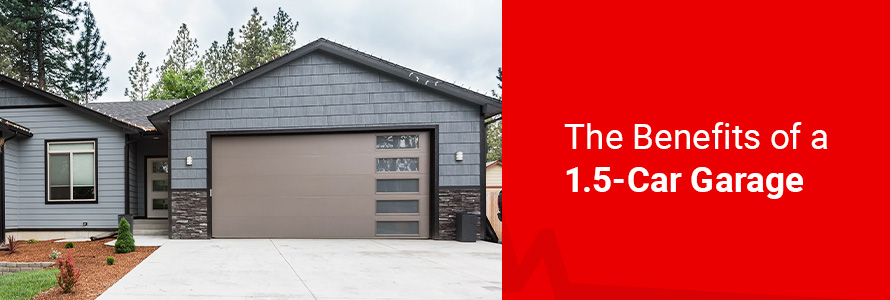
Admittedly, the name is a little bit silly. No one owns half of a car — or at least not one that is drivable! Why, then, is there a designated 1.5-car garage size? Surprisingly, the importance of the 1.5-car garage is growing, especially for homeowners with limited space on their property. Even those who already own a garage are opting to renovate it.
Contact UsIf you find that your garage currently feels cramped or are looking into ways a garage can add to the value of a home, consider whether the 1.5-car garage is the solution for you.
You’ll want to investigate aspects such as 1.5-car garage dimensions, the pros and cons, how exactly to increase your garage size and what goes into installing a new garage door to fit it. This guide provides tips, tricks and information to help you make your decision. Join us as we discuss all things 1.5-car garage!
Table of Contents
- How Big Should My Garage Be?
- What Is The Average Size of a 1.5-Car Garage?
- What are the Benefits of a 1.5-Car Garage?
- How do I Install an Oversized 1.5-Car Garage Door?
- Should I Expand My Garage?
- Are There Any Other Tips for Renovating a 1.5-Car Garage?
- Where Can I Buy One-and-a-Half-Car Garage Doors?
How Big Should My Garage Be?
When looking at statistical trends in new home builds, it is clear that the two-car garage is king. According to a recent study from the National Association of Home Builders (NAHB), 66% of all the new houses that broke ground in 2022 included a two-car garage. An additional 19% featured a garage with enough space for three or more vehicles.
However, not everyone who adds or expands a garage has an open lot available. In such cases, a two- or three-car garage might not be feasible, but a 1.5-car garage may be the perfect solution.
What Is The Average Size of a 1.5-Car Garage?
As the name implies, a 1.5-car garage is slightly bigger than a one-car garage but not quite as big as a two-car option. A standard 1-car or single garage measures between 12 and 16 feet in width, while a standard two-car or double garage usually measures between 20 and 24 feet wide. A standard three-car or triple garage is 30 feet wide.
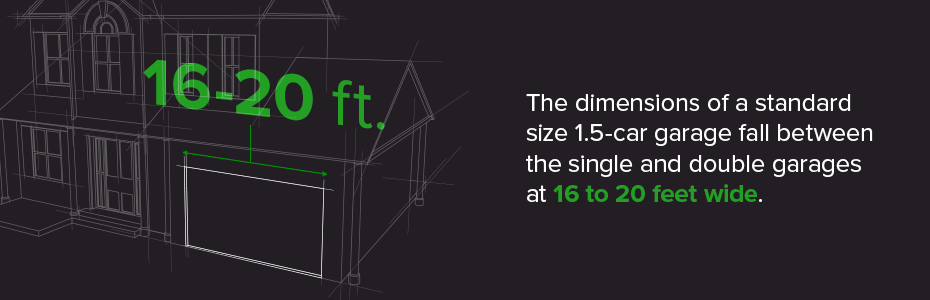
The dimensions of a standard size 1.5-car garage fall between the single and double garages at 16 to 20 feet wide. Some 1.5-car garages use one-car garage doors, while others capitalize on the extra space and install a larger 1.5-car garage door. Those with larger vehicles often opt for the latter.
All standard garages have roughly the same depth, about 22 feet to 24 feet — although some home designers have chosen special, extra-deep garages. The extra depth is especially useful for boat owners or those who have oversized trucks that could benefit from the additional length. If you are mostly interested in the 1.5-car garage because of the size of the vehicle you are looking to park in your garage, then added depth might be as useful as added width.
In other words, if you are wondering what the best sizes for a garage are, the answer will vary greatly depending on your needs.
What Are the Benefits of a 1.5-Car Garage?
If you have a fleet of vehicles you want to park under a roof every night, the 1.5-car garage may not be for you. However, for those with limited options for expansion, the 1.5-car solution is a perfect fit.
Let’s break down the many benefits of the 1.5-car garage:
1. Small Footprint on Tight Lots
If you live in an urban area, the 1.5-car garage may be the best way to avoid risky street parking. Additionally, if you own an urban or historic home, you know that expansions can be a headache. Houses were not constructed on large yards or acres of property. In such situations, garages may need to be fit into smaller spaces.
However, the standard one-car garage can be limiting. If you want to use a garage for parking a car as well as additional storage, the standard one-car garage just isn’t big enough. On the other hand, the two-car garage may be too big. Especially in historic districts, adding a garage with street access may be difficult, and adding access to two doors may be impossible.
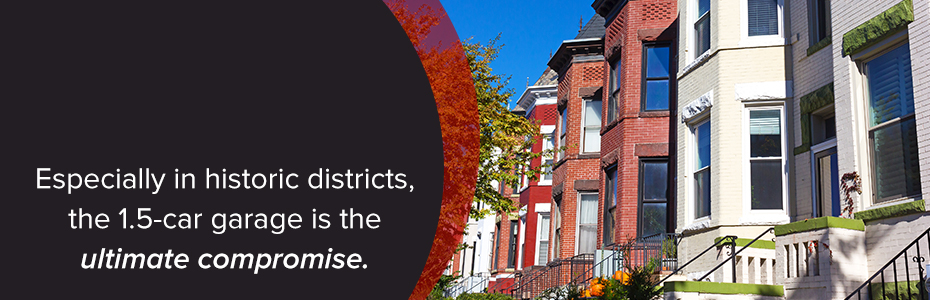
In such situations — where a homeowner wants both versatility and a smaller footprint, the 1.5-car garage is the ultimate compromise.
2. Accommodates Large Vehicles and New Drivers
If you have a new driver under your roof, you know that even the most responsible teenager is liable to scratch a rearview mirror or two. Becoming confident in the width of your rearview mirrors takes years of practice.
However, the risk to the rearview mirrors — as well as the side panels — of your car rises exponentially if your vehicle is wider. If your teen driver is learning on the family minivan, a tight single garage might be even more of a challenge than if you had a sedan.
Many with larger vehicles, such as vans, large SUVs and pickup trucks, opt for a 1.5-car garage with an equally oversized door. While some 1.5-car garages still feature the standard single-size door, the oversized door is a perfect pairing for an equally oversized car.
While this is especially helpful if you have a driver in the household who’s still using their learner’s permit, even if you have years of experience behind the wheel, you could still benefit from some additional side clearance when parking a big vehicle. In fact, if you have a commercial-grade vehicle, the oversized door might be a necessity. Parking in a single-car bay may amount to more than just threading a needle — it may be an impossibility.
3. Provides More Space for Loading and Unloading
For those with very young kids — especially those who still ride in a car seat — the extra clearance on each side of the car will make loading kids in much easier. Leaning into the backseat of a vehicle to latch a kid into their seat is hard enough. Doing so with limited space between the car and a wall makes the process downright back-breaking!
Even if you don’t have little kids, if you regularly transport things — such as groceries, equipment or luggage for travel — in the back seat of your car, having additional space for loading and unloading can make the process much less painful!
4. Gives You Added Storage
While a garage, by its most basic definition, is a place to store vehicles, many of us use that space to store countless other things. In fact, too much non-car storage has become a problem for many homeowners.
According to a 2022 survey, 36% of Americans said their garages are so cluttered that they can no longer fit vehicles inside them.
Unfortunately, the chances of joining this group exponentially increase if you have a single-car garage. That’s because the space is not designed for additional storage in the first place.
However, even if you have a small property and only one car, there are still plenty of things you’d probably love to keep in your garage — garden equipment, snow-clearing tools and sports gear perfectly suit garage storage.
That’s where the 1.5-car garage comes in. The added clearance on both sides of the car and space in the back of the garage can be utilized as storage space. Add in some well-designed storage solutions, and you can ensure you have plenty of space to park both your car and your lawnmower without damaging either.
5. Increases Available Work Space

Whether you are an artist, carpenter, craftsperson, aspiring rock star or a do-it-yourself mechanic, the garage is a great place for your craft. A 1.5-car garage’s expanded size makes the space even more versatile.
If you like to work on your car yourself, you have likely collected several mechanic’s tools over time. These tools take up space. However, considering that they are designed to be used on your car, it doesn’t make much sense to store them in your basement. They are often heavy and can become covered in grease, making transportation laborious and potentially messy. You also don’t want to leave them somewhere insecure, as they can also be expensive. With a single-car garage, both storing your equipment and parking your car is a challenge. A 1.5-car garage gives you the space you need.
If you use your garage as a practice area for an aptly named garage band, you need to make sure you have the space to rock out. While you will likely move your car into the driveway while you practice, a 1.5-car garage allows you to store your equipment between practices.
Regardless of how you use the space, a 1.5-car garage makes that space more versatile.
6. Enhances Accessibility
Guests and household members who use mobility aids benefit greatly from the extra space alongside parked vehicles. Walking frames, wheelchairs and rollators can be more easily maneuvered around the vehicle with a wider perimeter. You may even want to install railings on your garage walls now that you have room.
How Do I Install an Oversized 1.5-Car Garage Door?
While it is easy to see the many benefits of a 1.5-car garage door, the fear of installing one can often deter homeowners from investing. To demystify the process, here’s a short explanation of what is involved in the installation process.

Doors for 1.5-car garages are not a common size. That means many homeowners who want a 1.5-car garage door cannot simply order a standard door and be done with it. For those who are interested in a 1.5-car garage for the added storage but do not necessarily need a larger door, then this isn’t a big deal. In such cases, a standard single-car door may suffice.
However, if your primary motivation for investing in a 1.5-car garage is to accommodate a larger vehicle, an oversized garage with a regularly sized door won’t improve your situation.
In these cases, a custom door is the best solution. That way, you can invest in a garage door that perfectly matches your specifications. Because custom doors are designed to certain specifications, they cannot be mass-produced.
The key to maximizing value without breaking the bank lies in finding a custom garage door manufacturer that is affordable without sacrificing quality. In such cases, you need to partner with a custom fabrication company with a sterling reputation, such as Spokane and Coeur d’Alene’s own Continental Door Company.
A good fabricator will have the tools necessary to make doors to any specification. This includes being well-stocked with common raw spring snakes, meaning they can cut springs — a crucial piece of any garage door — to any length. They will also need the means to customize track assemblies. Finally, welding shops will need to have the means to shape, customize and support heavy steel doors, providing homeowners with beautiful doors that will stand the test of time.
Adding Value to Your Home
As with any home improvement, a garage renovation is about more than added convenience — although that is a huge factor! A garage expansion also has the potential to add incredible value to your home. For those who want to resell their home at some point in the future, added value has the potential of recouping a large portion of the initial investment.
According to Home Advisor powered by Angi, a garage addition will recoup 75% to 85% of its total cost upon selling your house. Regarding return on investment (ROI), that means a new garage ranks above the National Association of Realtors (NAR) ROI 2022 estimation of a complete bathroom renovation (71%) and the addition of a master suite (56%).
As far as increased home values are concerned, a new garage is a safe bet. Other factors — such as the availability of garages in other homes in the neighborhood — could further increase a new garage’s ROI.
However, if you already have a garage and want to improve it — such as expanding the size of the door — then your ROI will actually increase. According to NAR’s 2022 home remodeling research, a new garage door can recoup 100% of its initial cost upon resale. The study also showed that 80% of renovators felt a greater desire to be home after getting their garage door replaced.
Even more promising is JLC’s 2024 Cost vs. Value Report, which placed garage doors as the number one remodeling project for return on investment, reporting a staggering national average of 193.9% cost recuperation. In Spokane, Washington, specifically, the ROI on new garage doors is significantly higher, at 227.5%, meaning you get the entire cost of your new garage door back upon resale, plus over 100% profit.
In addition to ROI, a new garage might make your home more appealing when it goes up for sale. For instance, if you are selling during a time that could be described as a “buyer’s market,” getting a leg up on the competition is a great way to sell a home and avoid costly time spent on the market.
Improving Your Daily Life
Regardless of the dollars and cents of the project, you need to think about how a garage door replacement, addition or expansion will improve your daily life. If you have a hobby that brings you joy but don’t have the space to do it, then the way an expanded garage improves your life will be worth the cost.
If you have a driver in your family who consistently sends you to the paint department at your car dealer, then consider the amount of money a wider door might save you. And if you’re constantly having to bend in awkward positions to get your child into their car seat, then the investment just might be worth it, too.
Are There Any Other Tips for Renovating a 1.5-Car Garage?
If you really want to maximize the ROI of a new 1.5-car garage, there are little things you can do that will go a long way. Here are some of our best tips for maximizing your renovation:
1. Invest in Insulation
If you are renovating an older garage, it likely needs to be better insulated. As homeowners nationwide have become more aware of energy costs and carbon footprints, many new builds have focused on adding insulation. However, even those who add insulation to their older homes often overlook their garages.

Luckily, adding insulation is easy when you are doing a renovation. You will already have your garage empty and installation equipment ready. Basic insulation also isn’t too pricey, so it can likely fit into your budget.
2. Improve Security
Just as older garages tend to lack insulation, they also regularly need enhanced security.
New doors often come with extensive security features and innovative smartphone connectivity options, both of which appeal to most homebuyers. These technological upgrades will also keep your home safer, meaning they are a great investment for you and your family, even if you are not planning on selling anytime in the near future.
3. Look out for Tax Credits
Although our tax system is currently evolving, you should always keep an eye out for home improvement-related tax credits. These are especially prevalent for those looking to improve energy efficiency.
If you can take advantage of tax credits, you can further improve your ROI by recouping investment costs even before it comes time to sell.
Keep in mind that some of these tax credits are specific to your state or locality. So, even if a federal tax credit isn’t available, you may be able to find a state or local credit that can help defray the cost of investing in energy-efficient improvements.

4. Think About Curb Appeal
While we all have our personal tastes, if you are looking to maximize ROI, you need to make sure your improvements are in line with current trends. That way, your home will be more appealing to future buyers.
Luckily, even a new garage door can drastically increase your home’s curb appeal. This relatively inexpensive renovation means you can quickly and drastically increase your chances of selling your home by simply switching out an old, dated door with a new one.
5. Consider Maintenance Costs
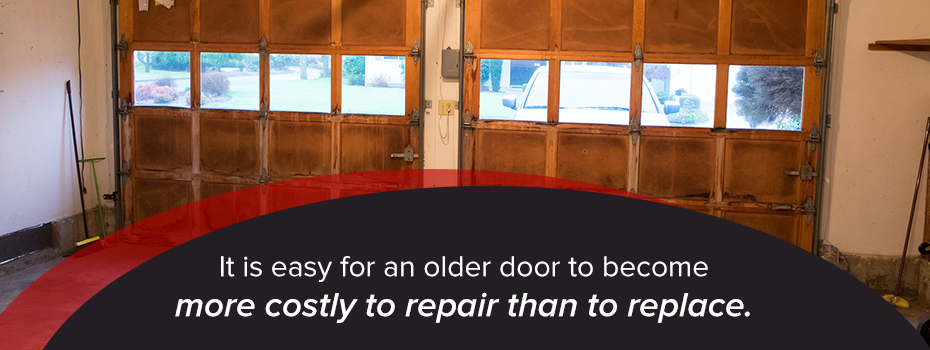
When calculating the cost/benefit of a garage renovation, also consider the cost of maintaining an aging door and opener. With so many moving parts that are used repeatedly, day after day, an older door can become more costly to repair than to replace.
So, if your door frequently requires you to reach for the phone and call for a repair, investing in a new door may be a wiser economic move.
These are only a handful of the many things to consider when looking into a garage renovation.
Where Can I Buy One-and-a-Half-Car Garage Doors?
If you are ready to invest in a new garage door, it is imperative that you turn to a partner you can trust. If you are in Spokane, Spokane Valley, Coeur d’Alene or the surrounding area, you can rely on Continental Door Co. for your 1.5-car garage door purchases and services. We’re proud to offer free design consultations for new construction projects and employ an experienced team of well-trained technicians.
Contact UsRely on Continental Door, Co. to Perfect Your New Garage
Since 2000, we have been serving the greater Spokane, Washington, area, providing peerless residential garage door installation, service, maintenance and repair, as well as custom garage door fabrication. We focus on passing on value to our customers, ensuring affordability and prioritizing premium quality.
If it’s time to install your 1.5-car garage door or build your 1.5-car garage addition, contact us online today!

Request Information About Garage Doors
Updated: 09/19/2024
Garage Door Sizing 101
Common Garage Door Sizing
Getting the right garage door size is essential when installing a new garage door at home. The number of cars your garage holds determines the size, but the measurements must be accurate to ensure a door that fits.
Explore the standard garage door sizes for various sized garages, including smaller and custom garage doors.
Understanding Garage Door Sizes for Your Home or Project
Whether you’re building a new garage or expanding your current one, the garage space comprises different dimensions that must be calculated individually and holistically to get the right door measurements. A tape measure is sufficient to calculate all the dimensions within the garage. These are the main areas to consider:
- Garage door opening: The opening or entrance to the garage is the size of the garage door, allowing the car to pass through. The door opening height and width are measured in inches.
- Side room: This is the space between the walls and garage door openings on both sides. Torsion springs are usually fitted in this space and should ideally be 3.75 inches on each side.
- Headroom: This is the area between the ceiling and the top of the door opening. Include the garage door opener clearance, usually about 3 inches.
- Backroom: This is the depth of the garage or the length between the opening and the back wall.
- Floor: This is the ground space between the four garage walls measured in length and width or square footage.
Overview of Standard Garage Door Sizes
Garage door sizes vary according to home sizes, but most are standard unless there are custom requirements.
The car sizes impact the dimensions as some homeowners may build according to the vehicle types. For example, they may have a hatchback, a Jeep or SUV, and an RV they want to park in one garage. Standard double garage door dimensions may not be suitable in this case.
The common dimensions for one- to four-car garages are measured in width by depth in feet, while other uncommon dimensions are included in the following section.
- One-car garages: These hold one car and are typically available in 8-by-7 feet, 8-by-8 feet, 9-by-7 feet or 9-by-8 feet. Another popular dimension is 12 -by-20 feet to accommodate a bigger vehicle and have enough space to walk around it in the garage and open the doors without touching the walls.
- Two-car garages: These fit two cars and come in standard sizes of 16 feet by 7 or 8 feet.
- Three-car garages: To fit three cars in a garage, you need approximately 30-by-20 feet up to 36-by-feet of space.
- Four-car garages: Housing up to four cars, this garage size is at least 40-by-20 feet up to 45-by-24 feet.
Detailed Dimensions for Various Garage Types
Regarding garage sizes, there are standard measurements, but the reality is that everyone’s needs differ. It’s not always a one-size-fits-all scenario. We explore the detailed dimensions for different garage types and what might best suit your requirements.
One-Car Garage Dimensions and Square Footage: Essential for Small Households
The dimensions for one-car garages are usually based on the home size. Households with only one vehicle don’t need much space but still need to avoid making the garage too small. Some smaller homes might have limited storage space, and a larger garage can help solve this problem.
In general, one-car garage dimensions include:
- Width: 12-18 feet
- Depth: 20-30 feet
- Additional sizes: 12-by-25 feet, 12-by-30 feet, 18-by-25 feet and 18-by-30 feet.
- Garage door width: 9-12 feet
- Area in square feet: 240-540 square feet
For more storage space, you could add half a car’s size in width, making the garage 18 feet wide instead of 12 feet. A 1.5-car garage provides ample space for a minivan or SUV in a single garage.
Two-Car Garage Dimensions and Square Footage: Ideal for Growing Families
Having multiple cars is common for growing families, so it’s important to accommodate an appropriate-sized garage. On average, double garages fit two cars and are measured as follows:
- Width: 22-30 feet
- Depth: 24-30 feet
- Additional sizes: 20-by-30 feet, 24-by-25 feet and 24-by-30 feet
- Garage door width: One 16-foot or 18-foot wide door, or two 9- to 12-foot wide doors
- Area in square feet: 360-660 square feet
The deeper or longer the garage, the more space you’ll enjoy. Consider adding 3-5 inches, depending on your vehicles’ sizes. You may want to have enough space for 2.5 cars, so you have extra room for storage or a workbench.
Three-Car Garage Dimensions and Square Footage: Balancing Space and Functionality
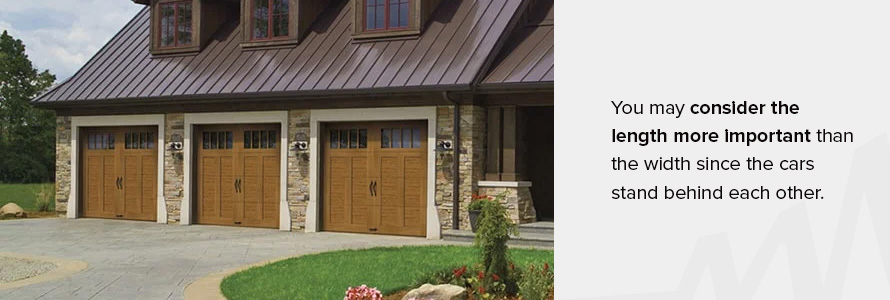
When you’re parking three cars, there are ways to balance space and functionality. Here, you may consider the length more important than the width since the cars stand behind each other. If parked next to each other to save space in length, one single garage and a double garage make sense.
Or, you could incorporate a four-car garage and use the additional space for storing smaller vehicles like a motorcycle or convert it into a workshop area.
How many square feet is a three-car garage? Standard dimensions for a single and double garage layout are typically these below:
- Width: 32-22 feet
- Depth: 20-30 feet
- Additional sizes: 36-by-24 feet
- Garage door width: An 8- to 10-foot-wide door and a 16- or 18-foot-wide door
- Area in square feet: 600-1,260 square feet
Detached three-car garages are another option if you don’t have space for an attached garage. Common dimensions for these include 32 x 24, 34 x 24 and 36 x 28.
Four-Car Garage Dimensions and Square Footage: A Multifunctional Space
Four-car garages require the most space in length and width and are versatile. So, how big is a four-car garage? These are the standard measurements:
- Width: 40-48 feet
- Depth: 20 feet or more
- Additional sizes: 24-by-45 feet
- Garage door width: Four 9- to 12-foot wide doors or two 16- to 18-foot wide doors
- Area in square feet: 800-1,680 square feet
Homeowners with four-car garages commonly use the extra space as a workshop, gym or recreational area.
Exploring Uncommon Garage Door Sizes
While most garages use standard garage door sizes, sometimes garages are built according to specific dimensions. Half sizes like 1.5 or 2.5-car garages can allow for more storage or workshop space, and five-car garages hold all your vehicles and projects.
With these, you’d add half a car’s width or more to standard sizes to achieve the ideal size.
Maximizing Your Garage’s Potential
The factors below contribute to maximizing your garage’s potential as you consider space and customization options.
Factors Influencing Garage Door Size Selection
Some factors that may influence the garage door size include:
- Garage type: The two main garage types are attached and detached from your home.
- Storage requirements: If you store hobby items and other goods alongside the parked cars, you’ll need a larger garage, which could mean a bigger door.
- Vehicle size: Ensure your garage is deep and wide enough to accommodate your varying vehicle sizes.
- Number of vehicles: Account for all your vehicles, including smaller, light vehicles like bicycles, motorbikes and scooters.
- Additional functionality: You may want to convert a section of a larger garage into a recreational or work area if you use a larger garage to park only one or two cars.
Utilizing Space Efficiently in Larger Garages
Larger garages allow numerous opportunities for utilizing space effectively. Whether you have a one-car or a four-car garage, you can use it for storage or as a recreational or work space.
Consider the garage layout and which parts are free. Corners and the far end are usually available to put up storage units or stack boxes. If there’s enough space, a table and chairs can create a lounge area.
Custom Garage Door Sizes: Tailoring to Your Needs
When planning a custom garage door, explore the options until you’re satisfied with what you can get. Value for money without compromising quality is key when considering the best local garage door companies.
A reputable contractor will advise you on customization preferences, like what can and can’t be customized. Explore their selections and what they can do for you.
Garage Door Sizing Frequently Asked Questions
▼ My Garage Door Opening isn’t perfectly square. Should I still get a standard-sized door?
If your garage opening isn’t perfectly square, it’s best to get a custom-sized door to ensure a proper fit and seal. Standard doors can leave gaps in uneven openings. A professional can measure and recommend the right custom size and installation techniques.
▼ I’m building a new garage. What’s more important, width or depth?
Think about what you’ll use your garage for besides parking. Extra depth is great for storage shelves or a workbench, but extra width can make it easier to get in and out of your car comfortably. Most people find a little extra depth more valuable.
▼ Will a bigger garage door opening let more light into my garage?
Yes, a larger garage door opening will naturally let in more natural light when the door is open. If you plan to use your garage as a workshop or hobby area, consider a door with windows or choose a larger opening to maximize the light. That said, consider the direction in which your garage faces before making the decision.
▼ Can the style of garage door affect the actual opening size?
Yes, certain decorative styles like carriage house doors with added trim can slightly reduce the drive-through opening height or width. This is usually minimal, but something to confirm if you have a particularly tall vehicle or limited space. Be sure to factor this in.
Choosing the Right Garage Door Size With Continental Door
Continental Door’s expert team is always available to help our valued customers in Spokane and the surrounding areas. We have been driving customer satisfaction since 2000 and strive to deliver the best service.
If you’re interested in installing a new garage or upgrading your current one and need help determining the right garage door sizes, call us or request a free estimate today. We are always eager to help!
How to Manually Open and Close a Garage Door
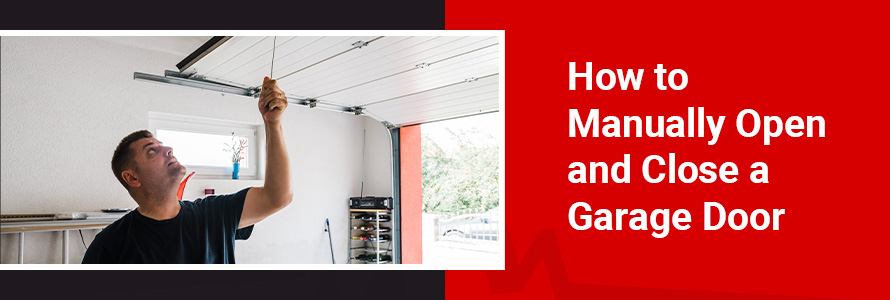
How to Manually Close and Open Your Garage Door
In the past, manually opening and closing a garage door was common practice. Drivers had to get out, unlock the garage door, lift it, drive in, park and close the door behind them. These days, most garage doors are automatically operated, so the driver can easily open and close the door by remote control.
We may not need it often, but knowing how to manually open and close a garage door is important when necessary. Here’s how to open your garage door manually when there’s a reason it won’t open automatically.
Can You Manually Open and Close a Garage Door?
What happens if the power goes out? How do you open a garage door without power? What if you lose the remote? What if your garage door opener is broken? Do you know how to open a garage door without the remote? There are several reasons you should know how to open an electric garage door manually. If you can’t open the garage door manually when needed, read on to learn more.
Safety Precautions Before Manual Operation
Safety should always be your priority when handling a heavy garage door. Numerous moving components can pose a risk, including:
- Faulty or broken springs
- A door knocked out of its tracks
- Loose or snapped cables
Inspecting these parts regularly for wear and tear can help you identify and prevent issues later.
Forcing the door closed when the springs are broken can cause it to slam down forcefully. This can damage the door or harm anyone standing close. This is why it’s important to know why the door isn’t working automatically before attempting to operate it manually.
A professional garage door technician will identify the problem beforehand to ensure no issues could lead to damage or harm.
Preparing Your Garage Door for Manual Operation
Before handling your garage door manually, check that the springs, tracks, rails and cables are in working condition. The door should balance evenly and lift without too much resistance. Be careful when handling the door, as it can be surprisingly heavy, especially wooden doors. Aluminum and steel doors are lighter to handle.
Double-check to see whether the source of the problem is a power outage, and inspect the garage door remote control for dead batteries.
How to Open a Garage Door Manually
Opening the garage door manually is not too difficult. When you find yourself in a situation where technology fails you, manual operation is your only option. A power outage is usually the cause of your opener failing, but the opener could also be faulty. How to open an electric garage door manually depends on whether you’re trying to get in or out.
Opening the Door From the Inside
When you’re stuck inside and need to be somewhere, the last thing you want to deal with is an unresponsive garage door. Follow these steps to open it manually from the inside:
- Disengage manual locks or deadbolts.
- Turn off the garage door opener power source if it’s not already off.
- Find and pull the red hanging emergency release cord from the center track, disengaging the door from the garage opener.
- Lift the door by pulling it upwards from the center over your head, where it will slide onto the track and remain firmly in place.
- Pull out your car and lower the door manually again.
- Engage manual locks or deadbolts to secure the door.
Opening the Door From the Outside
If you’ve come home and can’t access your garage, you can also open the door manually to get inside. Here’s what to do:
- Find the emergency built-in release with a key slot at the top of your garage door.
- Enter and turn the key, then pull the lock mechanism outward.
- The emergency release cord should be disengaged.
- Pull the cord, disconnecting the motor.
- Unlock the garage door at the bottom next to the door handle.
- Lift the door from the bottom up over your head into the tracks until it’s in place.
Not all doors have this built-in release mechanism. If yours doesn’t, you’ll need a wire coat hanger and a ladder. Follow these alternative steps:
- Straighten the hanger wire and make a hook at one end.
- Slide the hooked end between the garage door and frame at the top center.
- Locate the emergency release lever and pull it with the hooked wire end.
- You’ll hear a click when the door is disengaged.
- Remove the wire and lift the door from the bottom upwards into the tracks until it slides into position.
- Enter the garage and manually pull it down to close it once parked.
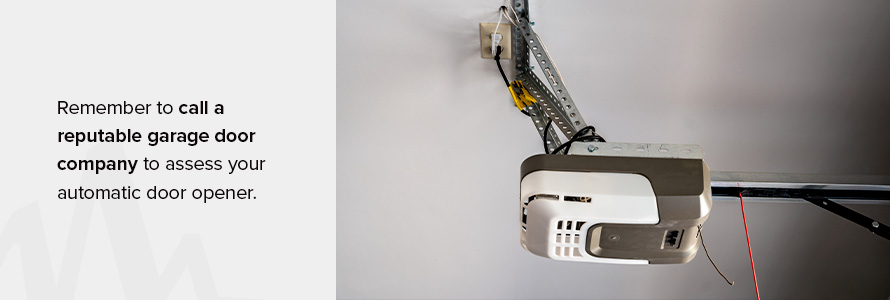
For safety, pull the emergency release handle when the garage door is down. Be careful where you place your hands, as there are pinch points where sections come together. Remember to call a reputable garage door company to assess your automatic door opener.
Troubleshooting Tips for Opening Issues
Some common garage door opening issues and solutions include:
- An aged opener: If it is old and worn, it may be time to replace it.
- Broken springs or cables: If the springs or cables are broken, they can’t lift the door and must be replaced.
- Remote control issues: Check the battery to see if it’s still working, and replace it with a new battery if necessary.
- Blocked photo eye sensors: Dust and dirt can block their transmission. Clean the lenses on both to resolve the issue.
- Rusted rollers and tracks: Old, rusty ones can affect the door’s motion and should be lubricated regularly or replaced.
- Strange noises when opening: This may indicate an underlying issue like loose cables, roller, nuts and bolts, broken springs, or misalignment. It’s best to have a professional technician check your door.
How to Close a Garage Door Manually
Closing a garage door manually is simple. Here are the steps to follow.
- While the door is open and securely in place, pull the red emergency cord down and back towards the opener.
- You’ll hear a click when the door is disengaged from the opener.
- Hold the door in the center and guide it until it closes.
- Secure it by locking the door at the bottom.
Returning Your Garage Door to Automatic Mode
Now that you know how to open and close an automatic garage door manually, you should know how to return it to automatic mode once the power is back. There are two ways to do this:
- Pull down on the release rope again, but this time, pull it toward the garage door to guide the trolley attachment back onto the track.
- If this doesn’t work, there should be a button you can press on the remote opener to automatically pull the attachment back into its proper location.
Check out Our Video to Learn How to Manually Open Your Garage Door
We’ve provided a lot of information in this article. If you’d prefer to watch and learn instead, check out this video.
Call Continental Door for All Your Garage Door Needs
The problem might not be the power but your garage door opener, so it may be time to repair or replace it. If you have issues with your garage door opener or garage door in the Spokane area, contact Continental Door Co., the garage door and opener repair and replacement experts for quick, friendly and efficient garage door service.
We are eager to help resolve any garage door opener concerns you have. Call us or request a free estimate, and we will get in touch.

Insulated Garage Doors: Energy Efficiency and Cost Savings
For any property owner, choosing the right garage door is about maximizing energy efficiency, cutting costs, and ensuring optimal performance. An insulated garage door from Continental Door can help you accomplish those goals. Explore how our insulated garage doors can help you optimize energy use and save on your utility bills.
What Are Insulated Garage Doors?
Insulated garage doors feature multiple layers and typically have a core consisting of foam insulating material. That unique design offers far more than just temperature regulation — it reduces noise and enhances durability to make a space safer and more enjoyable. Insulated garage doors from top brands like Clopay® are engineered to deliver exceptional performance. We carry numerous residential garage door options from this top-performing manufacturer, including these product lines with integral or optional insulation:
- Canyon Ridge®, multiple collections
- Classic™
- Coachman®
- Gallery® Steel
- Grand Harbor®
- Modern Steel™
- Reserve® Wood, multiple collections
- Premium Series
- Value Plus Series
- Value Series
How Do Insulated Garage Doors Work?
These doors block heat transfer to maintain consistent indoor temperature by trapping air within their insulated layers. To ensure they can continue to serve that purpose, it’s important to address the following needs:
Scheduled maintenance: Regular inspection and care will help ensure your door’s longevity.
Strategic lubrication: Oiling moving parts per the manufacturer’s recommendations will keep a door operating smoothly.
Monitoring components: Checking the door, roller, and track supports is essential for promoting garage door safety and performance.
Continental Door offers commercial door inspection and repair as well as services for residential customers.
What Are the Benefits of Insulated Garage Doors?
Insulated doors are especially valuable in regions with extreme temperature fluctuations, as they work to keep your garage cool in summer and warm in winter. That protection safeguards your vehicles and any other items stored in the space. Additionally, residential insulated garage doors are excellent for busy urban settings where noise reduction is a priority. These doors also increase the property’s overall value, making them an excellent investment for homeowners aiming for both functionality and financial benefits.

Trust Continental Door as Your Garage Door Expert
Continental Door Co. stands unparalleled in our commitment to quality. Having served the greater Spokane and north Idaho area since 2000, we’re more than vendors. We offer free design consultations for new construction or retrofit projects to ensure our clients get exactly what they want.
Trust the Continental Door team to be the go-to experts for all your insulated garage door needs. Contact us today for a free estimate!
Introducing the Clopay® VertiStack™ — A Revolution in Vertical Lift Garage Doors
The VertiStack door is an innovative option for commercial businesses that require minimal space and adds an open glass ceiling. This new, sleek design is attractive for organizations and customers, fostering a welcoming, modern environment while adding functionality.
Your business can use this door to expand seating space, create seasonal offerings, and provide an attractive look for customers. Keep reading to learn more about the VertiStack, including the benefits of adding it to your building and which businesses can benefit from implementation.
Taking a Closer Look at the VertiStack
The Clopay VertiStack offers a unique construction, eliminating the need for overhead tracks by featuring sections that stack above the opening. The door does not impact mechanical, plumbing or electrical features in the ceiling because it requires minimal space.
The design does not have exposed cables or tracks, providing a clear, modern and aesthetic appearance. This door comes with various window materials and aluminum finishes, so you can coordinate it with other building features and colors.
The modern design allows a seamless transition into outdoor spaces and allows sunlight to filter in through glass panels. Enjoy ample light and warmth when you close the door, or open it for extended seating options. VertiStack Clear also operates quietly, so you won’t hear loud noises as you open or close it.
Benefits of the Vertical Garage Door
Investing in a garage door is beneficial for many businesses, and the VertiStack offers additional opportunities for organizations looking for a new, attractive way to draw in customers. A vertical garage door empowers you to create a unique space and enhance the environment.
- Energy efficiency: The VertiStack is IECC-compliant for air filtration. Closing the door will allow sunlight and warmth to filter in for a pleasant environment. With the door open, you can enjoy the fresh air. UV protection and insulation save energy costs while enhancing your space.
- Enhanced curb appeal: The door’s modern, sleek design is attractive, drawing attention from potential customers. The VertiStack may also increase your property value if you decide to sell your business in the future.
- Increased security: You can outfit the VertiStack with features including photo eye sensors and a wireless sensing edge. These add to your security, limiting opportunities for break-ins or other potential damage.
- Improved durability: A new, high-quality garage door has enhanced durability. Due to robust materials, these doors can withstand the elements and provide years of reliable and efficient use.
- Clear aesthetics: This door is unobtrusive. Its minimal angles and lines are a convenient way to enhance your building and interior. The clear aesthetics allow you to welcome sunshine without detracting from the rest of your decor or stylistic choices.
- Expanding your footprint: By bringing the outside indoors with the VertiStack, you can invite a consistent flow between exterior and interior spaces.
- Quiet operation: With smooth and discreet operation, you can close and open the door anytime while feeling confident that you won’t disturb guests.

VertiStack Garage Door Materials and Finishes
The VertiStack uses high-quality materials and comes in various finishes to suit your needs. This door has 11 components:
- Torsion springs with 25,000 cycles
- Shaft coupler joining the shafts
- Strap spool with a nylon strap
- Top seal that mounts to the top section
- Head plates powder coated in RAL 9005
- Header channel for top seal channel
- Operator with top and front mounts available
- Manual lock integrated into the guide cover
- Sections (standard is clear anodized aluminum)
- Guide covers with a slip-on design and no visible fasteners
- Vinyl weather seal that clips on the guide channel
There are various glass and acrylic panels, so you can enhance your building and coordinate your door with your business preferences. Options available include frosted, insulated, low-E and tempered. Paint finishes include bronze, white and chocolate, and anodized finishes are bronze, dark bronze, black and clear.
Businesses That Can Use the Clopay VertiStack
Multiple businesses can install a VertiStack door to create a more relaxing environment and enhance sales opportunities. Some commercial settings that can benefit from VertiStack include the following.
- Educational facilities: Educational facilities can use the VertiStack to blend indoor and outdoor learning spaces. Learners can enjoy ample sunlight while the door is closed and blend learning opportunities with the natural world while the door is open.
- Restaurants: Food-service businesses can expand seating and seasonal offerings with the VertiStack. Whether you want to operate with a seasonal patio, an outdoor bar or create a space for entertainment while patrons enjoy their meals, the opportunities are endless.
- Office buildings: Organizations can boost team morale by introducing more light and fresh air. Additionally, employees could bring potential clients, partners or customers outdoors while discussing business opportunities for a more comfortable experience.
- Retail businesses: VertiStack’s clear glass can give passersby an unobstructed view of your current offerings, creating more opportunities for new customers to come inside to check out your deals and new items. Furthermore, the attractive, innovative look can make you stand out from competitors.
- Hospitality organizations: Hotels, bars, cafes and other hospitality organizations can use the VertiStack to maximize natural light and increase the building’s and interior’s aesthetic appeal. Additionally, this space can be an excellent way to stand out from competitors if you use it to provide entertainment or seamless transitions to beautiful areas on your property.
Request a Free Estimate for Your Business
A new garage door is a long-term investment that can benefit your business, reduce costs and become an eye-catching point of interest. As the largest Clopay dealer in the West, we feel confident we can bring your vision to life.
The team at Continental Door is passionate about providing high-quality products and services to everyone we work with. We’ve worked for more than 15 years to bring residential and commercial garage door solutions to customers in Coeur d’Alene, Spokane Valley, Spokane and the surrounding areas.
We deliver durability and quality with every installation, including the innovative VertiStack. We are the only Master Authorized Dealer® for Cloplay in the greater Spokane area, so you can feel confident in our ability to deliver exceptional results.
We think creatively about your door, and we can help you find beautiful designs that fit within your budget and meet your design and style preferences. Request an estimate from our team to integrate the VertiStack into your business.

Fire-Drop Testing for School Districts
School districts are responsible for keeping hundreds — or even thousands — of students safe while they learn. Ensuring your fire doors work correctly is a critical part of protecting everyone.
What Is Fire Door Drop Testing?
Fire-rated doors in schools and other district buildings must undergo regular professional inspection to comply with government standards.
The drop-testing process encompasses two steps:
- Operation test: Your technician drops the fire doors to ensure they close smoothly and completely.
- Reset test: Your technician inspects the door’s automatic closing mechanisms to verify that you can reset them properly.
Your technician will also perform a visual inspection to check for malfunctioning operating mechanisms or damaged components. If they find none, they will verify that your fire doors can close and reset according to the standards from the National Fire Protection Association (NFPA) — specifically, NFPA 80.

Why Is Fire-Drop Testing Important?
Regular certified fire-drop testing is essential for school districts for several reasons:
- Safety: Functional fire doors can prevent harm to students and faculty by containing the spread of smoke and flames.
- Compliance: Failure to comply with the requirements in NFPA 80 and other fire safety standards can cost school districts thousands in fines and damages.
- Prevention: Inspections can reveal minor issues that can be deadly later on. Regularly performing drop tests significantly reduces the risk of something going wrong during a fire.
- Door longevity: Left unchecked, minor wear and tear can quickly turn into a costly problem. Routine testing can find damage before it escalates and help extend your door’s life span.
- Insurance: A school district’s insurance provider may have specific requirements for fire door testing beyond that of NFPA 80 or IDA regulations. Failure to comply can raise a district’s premiums.
How Often Should You Perform Fire Door Drop Tests?
According to NFPA 80, you must perform fire door testing at least once annually to ensure everything works properly. A professional fire door technician must conduct the inspection, and thorough documentation is essential for compliance.
If your technician discovers any issues during the inspection, they can recommend the repair services needed to restore your door’s functionality.
Protect Your School District With Continental Door Co.
As the leading provider of commercial garage doors in Greater Spokane and North Idaho, Continental Door can help you ensure your school buildings have the proper fire door protections in place. Contact us today for more information about our fire-rated doors and related services.
Garage Maintenance Tips That Will Save You Money

While you may not think of it often, you use your garage door several times a day. From going off to work or school in the morning to running errands throughout the day, your garage door gets opened and closed many times.
Because there are so many moving parts that can wear out or break, it’s important to take time to maintain your garage door.
How to Save Money on Your Garage
Garage door repairs and replacements can be costly. To save money, check out a few garage maintenance tips that will ensure your door lasts for years.
Limit Garage Door Use as Much as Possible
The more you use your garage door, the faster all of the moving parts will wear out. Instead of using your garage door to enter and exit your home — like when you go out to get the mail or a package — use your front door instead.
Perform Regular Garage Door Inspections
Be sure to regularly look and listen for potential issues with your garage door. When you inspect it, look for signs of wear and tear like loose or bent hinges. Tighten any loose bolts or brackets. Pay attention to cables or springs that look asymmetrical.
You also want to notice if the door is running smoothly or if it gets caught or makes grinding sounds. Catching potential issues early on can help you avoid costly repairs.
Lubricate Your Garage Door
To make sure your garage door runs smoothly, keep all moving parts lubricated. You can use some light household oil on the overhead springs and rollers. If you’ve noticed your door has been squeaking or more noisy than usual, it’s probably time to lubricate it!
Keep Your Garage Door Tracks Clean
Your garage door tracks need to be clean to ensure your door can freely open and close as it should. Take a few minutes to brush away any debris or leaves that could be blocking the track. Be sure to check and clean both tracks on the side of the door.
Change Your Lights
Another way to save money with your garage door maintenance is to change out your lights. Instead of using regular lightbulbs, which don’t last long, switch to LEDs to save on your electricity bill each month.
Request Garage Door Service From Continental Door
If you are in the greater Spokane area and your garage door hasn’t been running as it should, turn to the team of experts at Continental Door. We can repair everything from coiling doors to garage door openers.
Reach out today to receive a free estimate or schedule a repair service.
5 Garage Door Design Ideas

Whether you’re getting ready to sell your home or just want to upgrade the style, garage improvements can have a big impact on both the curb appeal and value. No matter what you have in mind, Continental Door can help bring your design vision to life.
5 Styles for Your Garage Door
Need some inspiration? Here are a few garage design ideas to help get you started.
1. Rustic Warm Wood Finish
Whether your home has siding or white-washed brick, adding a wood garage door can produce an appealing finish. The contrast creates an accent that’s both warm and welcoming.
Because wood is a natural material, you’ll have many colors and grains to choose from depending on the look you’re going for. Whether you prefer Classic™ Wood garage doors or Reserve® Wood Modern contemporary garage doors, wood will add a rustic accent to your home.
2. High-Contrast Color Combo
Your garage design doesn’t need to blend in — let it stand out with a high-contrast color combo. Depending on your home’s architectural style and your design preferences, a two-tone door could add the curb appeal you’re going for.
With Modern Steel™ garage doors, you can choose from a wide range of door designs and colors to create a high-contrast look.
3. Bold in Black
If it’s your goal to make a statement with your garage door, you can’t go wrong with choosing black. Whether you go with Canyon Ridge® Louver garage doors or Canyon Ridge® Limited Edition Series carriage house and louver style doors, you’ll transform your exterior with a bold new look.
4. Modern Meets Industrial
Materials like steel and aluminum garage doors offer the perfect balance of modern meets industrial. This simple garage design can add a stylish finish to homes of all styles and sizes.
With features like glass panels and bronze anodized color options, you’ll find the perfect garage door to add a sleek, eye-catching design element to your home.
5. Pattern-Play
You can incorporate pattern-play into your garage design. While adding more than one color can help you create a patterned effect with your door, there are several other ways to add texture and style.
Some of those methods include customizing the way the wood lays, like using a chevron pattern, or adding unique molding or shutters.
Choose Continental Door
Ready to transform your home? With Clopay’s EZDoor™ tool, they’ve made it easy for you to see what different collections and styles would look like on your home.
Reach out today to learn more and get a free quote!