
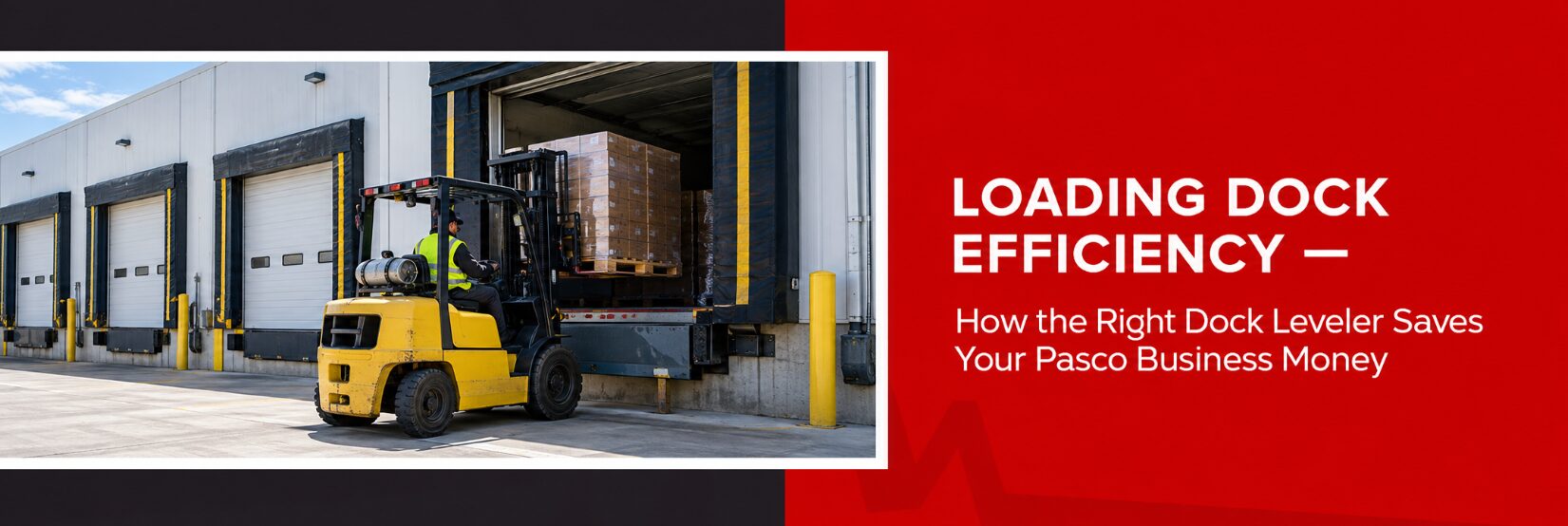
Pasco’s industrial corridor added two major truck-based distribution operations in the past two years. Amazon’s 1-million-square-foot cross-dock facility has processed 32 million sellable units since opening in October 2024, and Old Dominion Freight Line built a new trucking logistics center at Pasco Industrial Center 395. The Port of Pasco is also investing $20.8 million to expand its Reimann Industrial Center, another sign that truck traffic continues to climb.
Many loading docks in Pasco work harder than they did a few years ago, and the dock levelers that bridge the building and trailer absorb the brunt of that volume. Matching the leveler type to your operation reduces the risk of forklift damage, loading delays and OSHA violations.
Which Dock Leveler Type Suits Your Pasco Operation?
Choosing between hydraulic, mechanical and edge-of-dock levelers depends on your truck volume, load weight and the available space and infrastructure at your Pasco facility. Each type is part of a broader loading dock equipment lineup built for different operational needs.
Hydraulic Dock Levelers
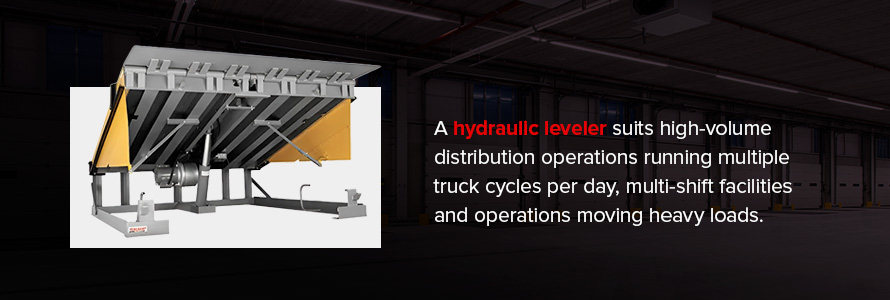
Hydraulic dock levelers use a motor-powered pump to push hydraulic fluid into a cylinder, which raises the deck. As the deck reaches its maximum height, another cylinder extends a hinged plate called the lip. The operator then releases the control, allowing the deck to lower until the lip rests on the truck’s trailer bed, creating a bridge for loading and unloading.
A hydraulic leveler suits high-volume distribution operations running multiple truck cycles per day, multi-shift facilities and operations moving heavy loads. Hydraulic dock leveler installation costs are initially higher, but the bonus is that these units need repair less often because they have no springs, chains or linkages that wear out under constant tension.
Mechanical Dock Levelers
Manually operating a mechanical dock leveler involves pulling a release chain, which disengages a lock and allows a system of powerful springs to lift the deck and extend the lip. The operator then walks on the raised deck, using their body weight to lower the lip onto the trailer bed.
This manual dock leveler design fits lower-volume facilities, budget-sensitive operations or buildings on a shorter-term lease where the lower up-front cost outweighs the trade-off. Springs, linkages and hold-downs need regular dock leveler repair to keep performing safely, so plan for that service schedule from the start rather than waiting for a spring to fail during a shift.
Edge-Of-Dock Levelers
Edge-of-dock levelers mount directly to the dock face, so they’re faster and less expensive to install. They typically fit tight staging areas, older buildings where a pit isn’t feasible and leased spaces that don’t allow permanent modifications. The narrower operating range and lower weight capacity make edge-of-dock levelers a poor match for high-volume or heavy-load docks, but a savvy, cost-effective solution when the application calls for it.
What the Wrong Dock Leveler Costs Your Business
A mismatched dock leveler can cause multiple problems for you and your team.
- Slower loading cycle time: A dock leveler that doesn’t match the dock or trailer height adds minutes to each cycle. When multiplied across 20 or more trucks per day at a busy loading dock, those lost minutes will add up to hours of lost productivity by the end of the week. A truck that sits past its scheduled window can also trigger carrier detention fees, adding a direct cost on top of the lost time.
- Forklift and product damage: Uneven transitions from a poorly matched leveler produce forklift impacts, shifted loads and damaged product. Facilities often trace these losses to driver errors or handling procedures rather than the leveler, so the repair and replacement costs could fall under the wrong budget.
- Maintenance and repair bills: Undersized equipment that is inappropriate for your volume will need frequent dock leveler parts and repairs, which can erode up-front savings within a few years. Each fix also pulls a dock offline for hours at a time, and that downtime can compound the labor costs already tied to a busy shift.
- Safety incidents and OSHA penalties: Falls, trailer separations and forklift incidents at a poorly equipped dock can result in workers’ compensation claims. Staff who manually activate a leveler shift after shift also accumulate ergonomic strain, and if either type triggers OSHA fines, penalties for serious violations are currently $16,550 each.
Frequently Asked Questions
These are the questions we hear most often about dock levelers in Pasco.
Is a Hydraulic or a Mechanical Dock Leveler Better?
Neither a hydraulic nor a mechanical dock leveler is inherently better. A high-volume, multi-shift facility handling heavy loads gets more value from a hydraulic dock leveler over its lifetime. A lower-frequency dock on a tighter budget can still run reliably on a mechanical dock leveler as long as it receives consistent service.
How Long Do Dock Levelers Last?
While a well-maintained hydraulic dock leveler may last a decade or more, mechanical levelers’ longevity may only be five to seven years with regular service, since springs and hold-downs need more frequent attention. Both lifespans depend heavily on maintenance consistency, which is why dock leveler maintenance matters as much as the initial installation. It’s worth scheduling dock equipment service for any new unit as a proactive approach, rather than treating it as an afterthought.
How Can I Know if I Should Replace My Current Dock Leveler?
Here are some warning signs that it’s time to replace a dock leveler.
- There are visible cracks, tears or stress fractures in the steel.
- The deck looks bowed or bent instead of flat.
- There are damaged or missing toe guards, side skirts or broken lip keepers.
- Hydraulic levelers have fluid leaks.
- Mechanical levelers have weak springs and hold-downs.
The leveler should remain stable when a forklift drives over it. Call for immediate attention if it shifts, sinks or pops up. Also, if you constantly need repairs, remember that the cumulative cost and downtime may make a replacement more economical in the long run.
Do I Need a Vehicle Restraint With My Dock Leveler?
Yes, you should use a vehicle restraint with your dock leveler. OSHA’s CFR 1910.26(d) requires measures that prevent a transport vehicle from moving while employees are on the dockboard. A vehicle restraint is a reliable solution for meeting this standard.
Advanced interlock systems tie the restraint and leveler together, so the leveler can’t operate until the restraint has engaged the trailer’s rear impact guard bar, adding a second layer of protection against premature departure. A full vehicle restraint line covers stand-alone and interlocked configurations for Pasco facilities of any size.
Request Your Dock Equipment Estimate From Continental Door
Continental Door serves warehouse and distribution operations throughout Pasco and the greater Tri-Cities area with hydraulic, mechanical and edge-of-dock levelers, vehicle restraints and dock seals built for high-volume truck traffic.
We provide free estimates that include an on-site assessment of your setup and a recommendation of the leveler type that fits your cycle volume, load weight and budget. Reach out to our team today and give your Pasco loading dock equipment that can keep pace with your operation.