Spokane winters hover right at the freeze-thaw threshold, with December temperatures averaging 36° Fahrenheit during the day and dipping to 27° Fahrenheit overnight. These temperatures put your garage door through repeated expansion and contraction cycles that accelerate wear on every moving part. Homeowners in Post Falls and Coeur d’Alene face the same climate-driven stress.
A yearly tuneup before winter prevents the expensive emergency callout when your door won’t open on a January morning. The following checklist is built for where you live, with the specific inspections, DIY tasks and professional boundaries Spokane-area homeowners need to keep their doors operating safely through freeze-thaw season.
Your Annual Garage Door Maintenance Checklist
A structured garage door maintenance checklist helps you catch small issues before they become major repairs. In Spokane, Post Falls and Coeur d’Alene, garage door maintenance should include climate-specific inspection points to address the wear patterns unique to this region.
1. Examine Rollers, Tracks and Hinges
Start with a visual inspection of the rollers, tracks and hinges, looking for cracked or chipped rollers, debris or ice buildup in the tracks and loose or bent hinges. Ice buildup inside track channels is common when temperatures hover near freezing and causes the door to jerk, grind or stall mid-travel because steel tracks contract in cold weather and tighten against rollers. This winter-specific maintenance concern is particularly relevant in Post Falls and Coeur d’Alene, where early-season freezes often catch homeowners off guard.
While tightening loose hardware is a safe DIY task, replacing rollers or realigning tracks should involve a technician. Do not attempt to realign or adjust tracks yourself because this requires professional tools and can create dangerous spring tension imbalances.
2. Inspect Your Torsion or Extension Springs
Torsion springs are mounted above the door, while extension springs run along the sides. Both types can show visible signs of wear. Look for gaps in the coils, rust accumulation or asymmetry between the left and right springs.
Cold temperatures can affect spring performance, while Spokane’s freeze-thaw cycles cause metal to repeatedly expand and contract, creating fatigue. This effect makes garage door spring maintenance especially critical in this climate.
Springs operate under extreme tension and should never be adjusted or replaced by an untrained homeowner. Unfortunately, DIY spring replacement attempts can result in serious injuries, so if you notice any signs of wear, contact a professional to replace your garage door spring immediately.
3. Test the Balance
A properly balanced door reduces strain on the opener and extends the life of every component, and the test can take under two minutes with no tools required. First, disconnect the opener so you can manually lift the door to about halfway and then release it. The door should hold in place, but if it drops or rises, the springs need professional attention.
An unbalanced door forces the opener to compensate while cold weather adds strain, creating a combination that accelerates wear. The springs should be doing the heavy lifting, not the opener. The Door and Access Systems Manufacturers Association recommends annual professional inspection and balance testing to maintain safe operation.
4. Lubricate All Moving Parts
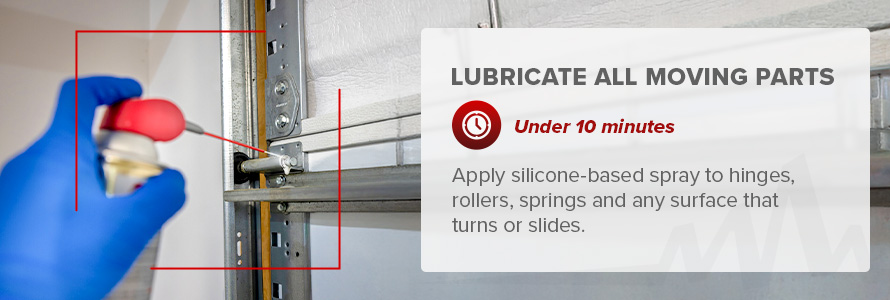
Lubrication can take under 10 minutes and is an impactful DIY maintenance step. Apply silicone-based spray to hinges, rollers, springs and any surface that turns or slides, but avoid WD-40 or petroleum-based lubricants, which can become less effective in cold weather.
Skip lubricating the tracks entirely because debris accumulates in lubricated tracks and causes binding. Freezing temperatures stiffen metal components, so pre-winter lubrication is especially critical where temperatures dip early. Apply lubricant in late fall before the first freeze to ensure smooth operation through winter.
5. Inspect and Replace Weather Seals
Weather seals protect four surfaces — the bottom seal, side jamb stops, top seal and section joints on insulated doors. The inclement climate in Spokane means these seals are often exposed to below-freezing temperatures, which quickens their deterioration.
The bottom seal faces the harshest conditions. Snow melt refreezes against it overnight, and if it bonds to the concrete floor, opening the door puts enormous strain on the springs and opener. Two quick DIY tests reveal seal condition.
The daylight test requires closing the door and turning off the lights. If you see light at the bottom or sides, the seal is failing. The dollar bill test also works well. Simply close the door over a bill and pull gently. If the bill slides freely, the seal has lost contact.
Replacing a bottom seal is DIY-friendly, though side and top jamb work may warrant a technician, especially if the door frame requires adjustment.
6. Test Your Opener and Photo Eyes
The rail should operate smoothly without grinding or hesitation. Listen for signs of rail strain or lubrication issues while verifying that the auto-reverse function triggers correctly by placing a two-by-four board on the floor in the door’s path. The door should reverse immediately upon contact.
Photo eyes require checking next. They must be aligned and free of obstruction, because if either eye is misaligned or blocked, the door will not close. Cold weather thickens lubricants and stresses the opener, especially when the door is unbalanced, so if your opener is struggling or making unusual noise, schedule garage door opener repair before it fails.
Spokane Garage Door Maintenance FAQs
The following common questions about garage door preventive maintenance reveal what Spokane-area homeowners need to know before tackling their yearly checklist:
How often should a garage door be serviced?
Professional service should happen once a year, while light DIY checks like lubrication and visual inspection should happen every three to six months. For Spokane, Post Falls and Coeur d’Alene homeowners, the most important checks are in late fall before the first freeze and again in early spring after the thaw.
What breaks first on a garage door?
Weather seals and springs are generally the first to show wear, though for different reasons. Weather seals degrade from constant weather exposure, while springs fail from cycle fatigue accelerated by freeze-thaw stress. Replacing seals is affordable and DIY-friendly, but spring replacement requires professional service due to extreme tension.
How long do garage door springs last?
Torsion springs are rated for approximately 10,000 cycles, which typically translates to roughly seven to 10 years at average household use. In Spokane’s freeze-thaw climate, springs may wear faster due to the stress of repeated temperature changes on metal components. Signs of wear include the door feeling unusually heavy, a visible gap in the torsion spring coil or hearing a loud bang from the garage.
Why is my garage door noisy?
Most garage door noise has a fixable cause, such as a lack of lubrication, worn rollers, loose hardware or an unbalanced door. Squeaking or rattling usually indicates a need for lubrication or hardware tightening, while grinding or banging signals a more serious issue with springs or tracks. Address noise early before minor issues escalate into major repairs.
Schedule Your Annual Tuneup With Continental Door, Co.
If you’re in the greater Spokane area, including Post Falls and Coeur d’Alene, Continental Door has served homeowners and businesses in the area since 2000. We’re a family-owned company with deep roots in this region, and we understand the garage door challenges that come with living here. We offer high-quality residential garage door products from Clopay®, built to withstand our climate.
We offer free estimates on all residential garage door work, and our 24/7 emergency service means you’re covered if something breaks outside business hours. The smarter approach is prevention. So be sure to schedule your annual tuneup before the next freeze, or learn more about our preventive maintenance services and Spokane garage door repair coverage.